07 March 2026 – 24 January 2027
Year-Programme 2026
YOU AND I ARE EARTH
At a time when the Earth is increasingly making its limits felt, RADIUS presents the 2026 year-programme YOU AND I ARE EARTH — TOWARDS AN EARTHLY POLITICS. Starting from the question ‘Where can we land?’ the programme explores how human, non-human, and more-than-human life are inextricably intertwined in what philosopher Bruno Latour calls the ‘critical zone’: the thin, vulnerable layer in which soil, water, air, and living beings constantly influence each other. Against the backdrop—or perhaps the foreground—of climate change, ecological depletion, and geopolitical tensions, RADIUS invites artists, thinkers, and visitors to no longer view the Earth as a static backdrop or passive resource, but as an active, political, and relational entity. Through exhibitions, education and public programmes, YOU AND I ARE EARTH explores new ways of living together, perceiving, and acting, breaking down the separation between humanity and ‘nature.’ Art serves as a vehicle to move between timescales, perspectives, and disciplines, and to connect imagination with responsibility. In this way, the year-programme aims to create space for more earthly thinking and feeling, in which vulnerability and connection form the starting point for a shared future.
We hope to meet you at RADIUS in 2026 during the YOU AND I ARE EARTH year-programme!
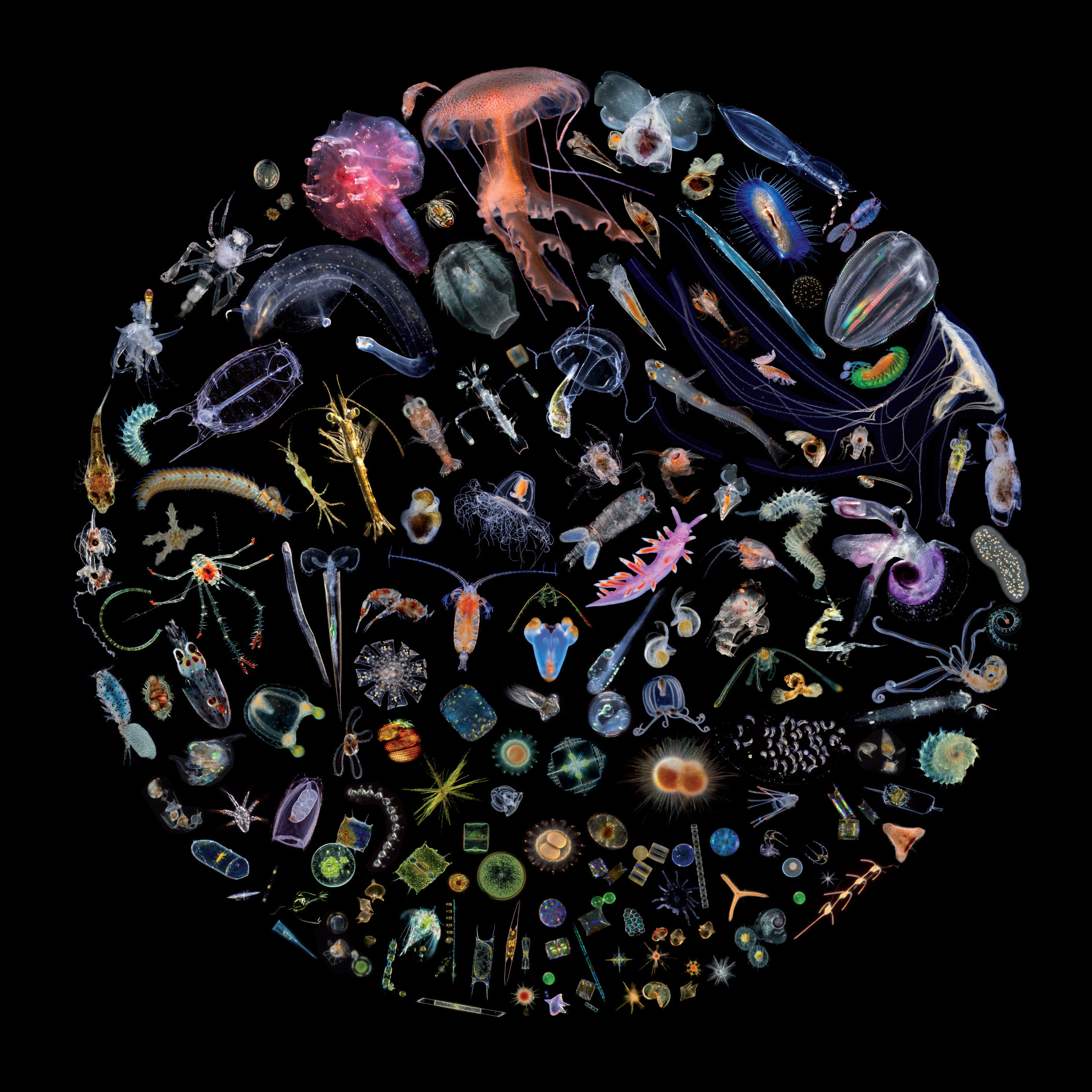
AT RADIUS IN 2026
⌀ DISMANTLE THE ANTHROPOCENE
— TERRESTRIAL TALES FROM THE LATE HOLOCENE
⌀ KARLOS GIL: THE CENTRE CANNOT HOLD
⌀ AN UNFINISHED ODE TO MUD
7 MARCH — 31 MAY 2026
With the group exhibition DISMANTLE THE ANTHROPOCENE, RADIUS opens its 2026 programme with a critical rethinking of the idea that we live in a human-dominated geological era: the Anthropocene. Instead of positioning humans as the dominant geological force, the exhibition shifts the perspective to deep time and material affinity, in which the human body emerges as a temporal nexus of mineral, fossil, and atmospheric processes. The participating artists explore how extractivism, colonial power structures, and the combustion of fossil fuels have reshaped the Earth, but also how these processes are unevenly distributed and disproportionately affect different bodies and landscapes. By ‘dismantling’ the Anthropocene, space is created for centrifugal narratives that question the exceptional position of humanity and present the planet as a polyphonic archive of geological, political, and ecological relations. The exhibition invites us to no longer read Earth as a backdrop to human history, but as an active player in a shared, more-than-human timescale in which responsibility, vulnerability, and connectedness are central.
In his solo exhibition at RADIUS, Karlos Gil takes the viewer on a cosmic journey through deep geological time and landscapes scarred by the extraction and combustion of fossil fuels. In the film THE CENTRE CANNOT HOLD, the Earth appears as a living artifact: hollowed out, exploited, and simultaneously animated by non-human forces beyond human control. Weaving together science fiction, mythology, and industrial history, Gil explores how ideas of progress, energy, and dominance converge in a world where oil fields, deserts, and subsurface layers function as political and spiritual spaces. His work confronts us with the atmospheric consequences of extractivism and the question of what is lost when the Earth is reduced to a raw material. Simultaneously, he opens up a space of imagination in which alternative, non-anthropocentric perspectives become possible, and in which humanity is no longer the stable center, but one of many temporary manifestations within a constantly transforming planetary system.
The educational workshop AN UNFINISHED ODE TO MUD focuses on the vital, yet often overlooked, topsoil of the Earth: the soil in which life originates, circulates, and disappears. Departing from the central question of the year-programme—‘Where can we land?’—this workshop invites students to approach the Earth not abstractly, but through direct, sensory, and malleable experiences. Mud, humus, air, and water are approached as active, living materials that create the conditions for human and non-human existence. Under the guidance of art educators, students explore how soils function as dynamic ecosystems, and how climate change, urbanisation, and depletion are putting these vulnerable layers under pressure. By designing speculative prototypes that can nurture and restore the soil, imagination is connected to care and responsibility. In this way, the workshop invites students to think in terms of interdependence from an early age and to experience the Earth as a shared, living ground upon which our future literally rests.
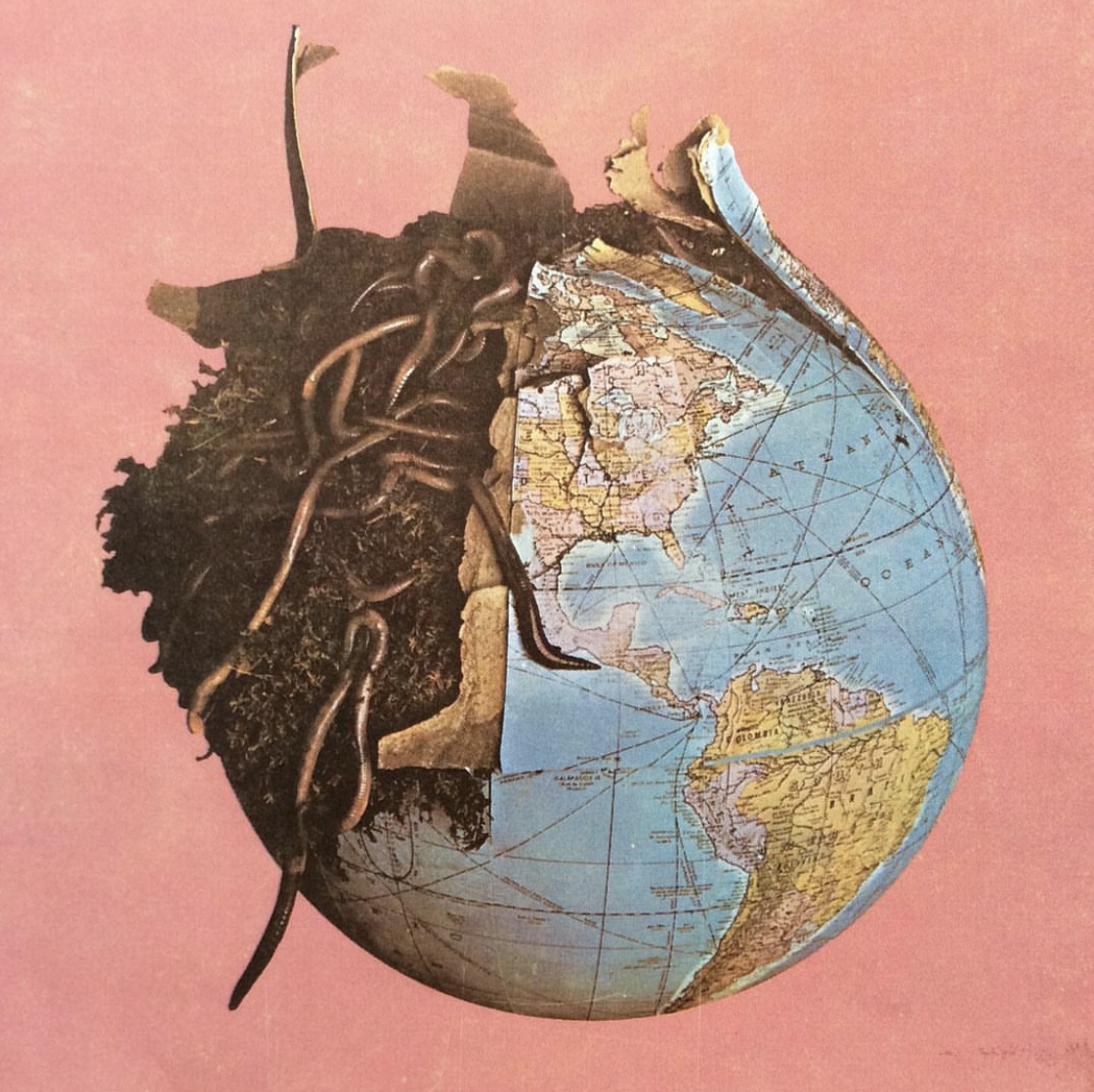
⌀ THE EARTH IS THINKING ALL ALONG…
— A CREATIVE PHILOSOPHICAL TRAVELOGUE
Guest curator: RICK DOLPHIJN
⌀ MIRIAM HILLAWI ABRAHAM: THE NIGHT THAT DREAMS — COSMOLOGIES OF SCALE
13 JUNE — 27 SEPTEMBER 2026
In the group exhibition THE EARTH IS THINKING ALL ALONG… artists and philosophers join forces in a collaborative search for ways to think with, rather than about, the Earth. Starting from the understanding that the ecological crises demands not only technological solutions but also new forms of attention, perception, and imagination, the Earth is approached as an active thinker and co-actor. In sensory constellations of sound, movement, scent, matter, and language, so-called ‘earth-thought experiments’ emerge in which human and more-than-human perspectives enter into dialogue. The exhibition invites us to let go of familiar divisions between subject and object, culture and nature, thinking and feeling, and to experience the Earth as a dynamic network of relationships that constantly speaks back, moves with, and contradicts. This creates a space for a philosophy that is not practiced from above, but in the midst of the world, and in which new forms of responsibility, listening, and coexistence take shape.
In her solo exhibition, Miriam Hillawi Abraham repositions the visitor in relation to both Earth and the cosmos, weaving together precolonial African cosmologies, architecture, and speculative fiction. The installation functions as an imaginary outpost where terrestrial landscapes, constellations, and spiritual knowledge converge in a layered spatial experience. Abraham explores how colonial and technological worldviews have shaped our relationship to space, time, and the future, and how alternative, non-Western knowledge practices enable different forms of orientation. Through fragmentation, abstraction, and narrative shifts, she opens up space for ‘interrupted timelines’ that are not repaired, but continued and reinvented. Earth appears here not as an isolated planet, but as part of a shared cosmic order in which matter, history, and imagination intertwine. Talismans, star charts, and architectural structures function as navigational instruments in a world where displacement and connection converge, and where new forms of terrestrial and cosmic citizenship become conceivable.
⌀ TENDING LOSS
Guest curator: STEF CRAPS
17 OCTOBER 2026 — 24 JANUARY 2027
The group exhibition TENDING LOSS explores the emotional and existential dimensions of ecological disruption. The concept of ‘solastalgia,’ which refers to the grief and alienation that arise when one’s own living environment is irreparably altered, forms the starting point for an investigation into grief, loss, and melancholy in the era of climate change. Artists, thinkers, and researchers visualise diverse forms of ecological loss: the disappearance of species, landscapes, ecosystems, and the sense of home. Through installations, sound, film, and performative practices, a space is created in which these often unspoken emotions can be acknowledged and shared. Simultaneously, the exhibition explores new rituals, languages, and collective imaginaries to deal with this loss, not only human, but also multispecies. TENDING LOSS shows that grief need not simply mean paralysis, but can develop into a source of care, solidarity and resistance, and into a renewed connection with an Earth that changes but never ceases to speak.
YOU AND I ARE EARTH
YEAR-PROGRAMME
(text continues underneath the image)
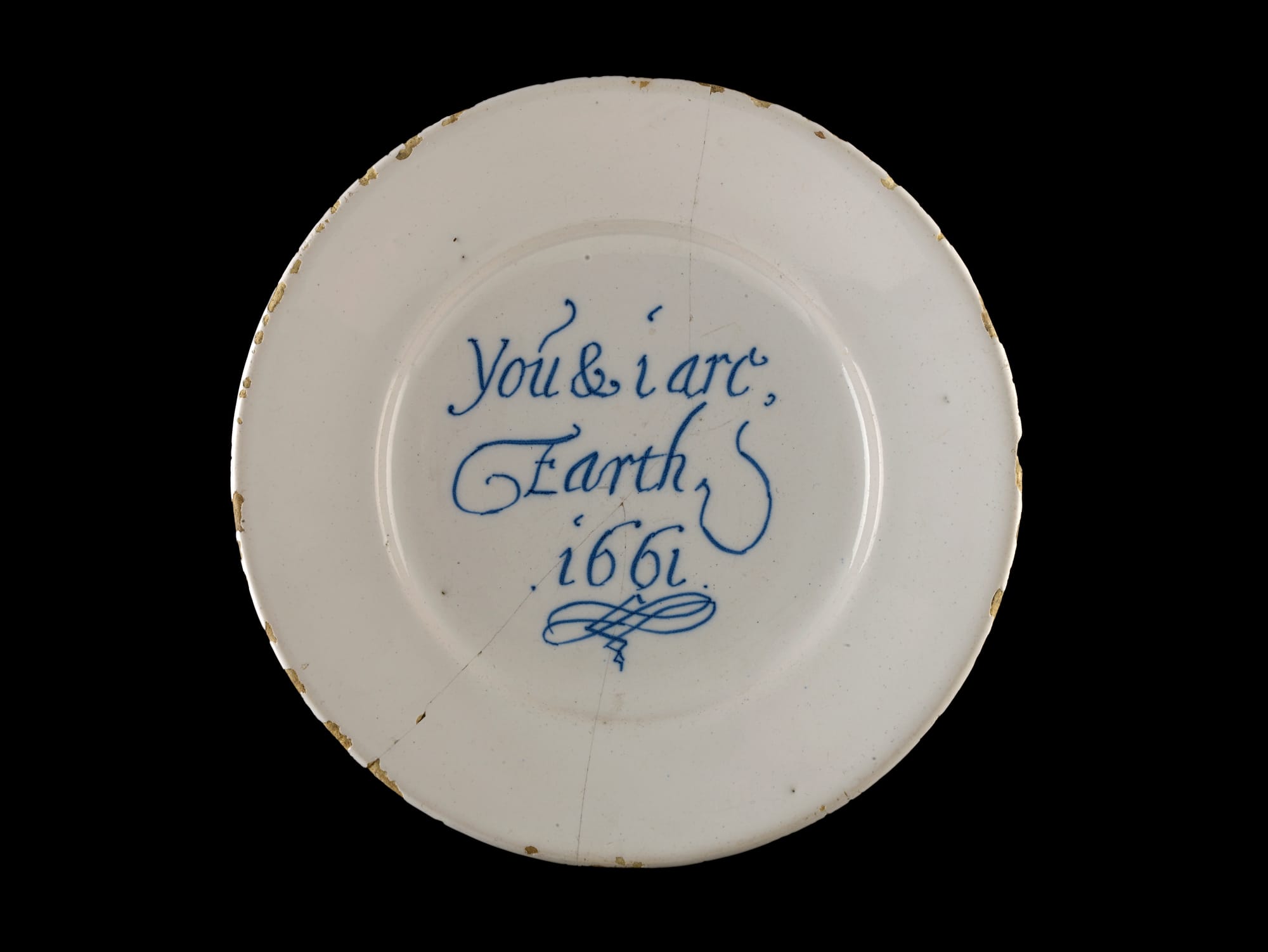
INTRODUCTION: WHERE CAN WE LAND?
The Earth quakes, cracks, collapses, erupts, storms, and whirls; its epidermis dampens or dries, warms up or cools down. In the face of the ceaseless and uncontrollable moods of their environment, living beings have no choice but to organise their worlds. They are all developing techniques to make up for their inadequacy and manage to live in the sky, on the land, and at sea. They are tirelessly absorbing, altering, moving, and organising the elementary particles of the universe. In so doing, the throng of living beings intermingles and constructs the Earth.
— TVK, The Earth is an Architecture
As everybody learned at school, when the position of the Earth in the cosmos is modified, a revolution in social order might ensue. Remember Galileo: when astronomers made the Earth move around the sun, the whole fabric of society felt under attack. Today, again, four centuries later, the role and the position of the Earth is being revolutionised by new disciplines: it appears that human behavior has pushed the Earth to react in unexpected ways. And once again, the whole organisation of society is being subverted. Shake the cosmic order and the order of politics will be shaken as well. Except that, this time, the question is not to make the Earth move around the sun, but to move it somewhere else altogether! As if we had to learn anew how to land on it.
— Bruno Latour, Critical Zones
How can this Earth continue to rotate? Seemingly so, the world continues to accelerate tirelessly, and the Earth lumbers on, exhausted and wholly indifferent to human actions. Although the latter does not seem entirely immune and unresponsive to the way fossil-fuel-burning-man continues to disrupt its metabolism, the biosphere. So far, Earth is the only planet known to harbour life, and whether we like it or not, for the time being, Earth is where we take our stand, as dwellers in the critical zone we call the biosphere—the ever-narrowing bandwidth in which life can persist. In short, we are Earth-bound but unable to find a position, as the late philosopher of science Bruno Latour would have said.
Against this backdrop, RADIUS presents the programme YOU AND I ARE EARTH in 2026, focusing on the central question ‘Where can we land?’ Through five exhibitions and an extensive public and educational programme, we will collaborate with artists and other stakeholders to explore new compositions and possibilities for life in the critical zone—the thin, dynamic layer on Earth’s surface where all life is connected to rock, soil, water, and air. Beyond a purely scientific definition, this year-programme—following philosopher Bruno Latour—emphasises the critical zone as an ecological and political concept, emphasising both the vulnerability and interconnectedness of life in the face of climate change.
REKINDLING LIFE
The ecosystems that have existed on Earth since the origin of life are tirelessly woven together by the dynamics of living organisms: co-evolution, diversification, forest succession, the movement of sediments and fish in rivers, pollination, the creation of humus by soil fauna, and the circulation of matter and energy in food webs. […] Everything that makes up the world from a ball of accreted matter called a planet is an effect of life: we inhabit the effects of the lives of others.
— Baptiste Morizot, Rekindling Life: A Common Front
The journey of humanity, a relative latecomer in the history of the living, is indescribable, yet can be summarised in a single sentence: making life livable and the world habitable. Recently, ecological thinking has realised, as other peoples already practice daily in their relationships with living things, that life is only livable for humans if it is also livable for the fabric of the living as a whole. That the world can only be livable for us if it is also livable for other living species, for we are nothing more than a nexus of relationships interwoven with other life forms.
With this in mind, we are developing the year-programme YOU AND I ARE EARTH, to continue the conversation about shared ground and the importance of an open society in times of geopolitical tensions and increasing social polarisation. Just when political attention seems to be drifting away from climate change and thus from defending our diverse environment, we want to collectively lift the world with this programme, setting it back on its axis—call it an ecological lever to rekindle the flames of life. But a sense of powerlessness and despair prevails, despite civil society’s strong sense of urgency to take back control. The problem lies in the intermediary between our hands and the world. We need ideas and hands, especially ideas that fit the available hands.
ON THE ROLE OF ART AS A VEHICLE
Interscalar vehicles have political, ethical, epistemological, and/or affective dimensions. What makes something an interscalar vehicle is not its essence but its deployment and uptake, its potential to make political claims, craft social relationships, or simply open our imaginations.
— Gabrielle Hecht, Interscalar Vehicles for an African Anthropocene
In our cultural landscape, the idea that we are interdependent and related to the rest of the living world is now commonplace. But why, then, isn’t the living world central to our collective attention, to the political arena of what preoccupies us as a society above all else, and sometimes even to contemporary ecological thinking? Because, in our cultural self-image, we do not see ourselves as living beings.
With the year-programme YOU AND I ARE EARTH, we aim to reconsider this lack of human connection with the environment, specifically by transcending the false opposition between humanity and ‘nature.’ We do this through the work of artists who—following Gabrielle Hecht’s definition—use their practice and work as an ‘interscalar vehicle’ to create new connections between humanity and the Earth, viewed from the perspective of interdependence. The story of climate change is all-encompassing and is generally considered too vast and abstract. In this sense, art can serve as a vehicle, on the one hand, by moving between timescales, making complex systems accessible, and making events beyond our capabilities tangible and palpable. On the other hand, art enables us to move from imagination to action—without imagination, there is no vision of a desirable future.
With the programme YOU AND I ARE EARTH, RADIUS develops a counterpoint to the centripetal force of the dominant narrative of the Anthropocene—which centers on the exceptionality of a particular, detached human type—by telling centrifugal stories that acknowledge the enormous inequalities generated by the various forces changing our planet.
Towards a more earthly Earth!
The programme YOU AND I ARE EARTH is curated by Niekolaas Johannes Lekkerkerk, with contributions from Andrea Koll, Sergi Pera Rusca, and Daan Veerman.
RADIUS and the 2026 year-programme YOU AND I ARE EARTH are made possible with support from the Mondriaan Fund, the Municipality of Delft, the BNG Cultuurfonds, and the Van der Mandele Stichting.