Participating artists: Sunah Choi & Alex Taek-Gwang Lee Xandra van der Eijk & Rick Dolphijn Kristiina Koskentola & Gaowa, Guan Jin Fang, Xiaohan Han, Emmi Kuittinen, Reeta Suvanto, Pekka Tuovinen Ferran Lega & Christian Alonso Shintaro Miyawaki & Toshiya Ueno Katarzyna Pastuszak & Irena Chawrilska & Nat Chylińska Tihomir Topuzovski Guest curator: Rick Dolphijn
From crowded swamps to sparse highlands, from remote archipelagos to extensive tundras to urban deltas, the Earth composes itself as a boundless array of local and translocal systems that persist, interact, and coalesce. These systems do not merely assemble matter, they persevere, adapt, learn, imagine, remember, and respond to what they encounter. They carry their own archives forward, folding past climates, extinctions, migrations, and uprisings into the conditions of the present, and they anticipate worlds yet to come. What we call environment is this dense, ongoing labour of planetary self-organisation: waterscapes thickening and eroding, forests advancing and retreating, glaciers pulsing, winds and currents ceaselessly redrawing the possibilities of life. The Earth is not a background, not a passive stage upon which history plays itself out, but an active, inventive power that continuously reworks its own surfaces, volumes, and atmospheres.
Set against this restless, thinking Earth, the Modernist narratives that have come to dominate our global conscience since around 1800—capitalist, colonial and extractivist—told a very different story. They claimed that thought was the exclusive privilege of the human, and that the Earth, with all its potentials, was there to be exploited. This privilege, however, was never meant for everyone. It attached itself to a particular figure of the human: white, male, possessing, authorised to speak as if for humanity as such while countless others—peoples, territories, species—were rendered exploitable, disposable, or unintelligible. For more than two hundred years, these narratives—and the infrastructures and institutions built in their image—have overwritten the planet’s multiple histories, disturbed its balances, and opened deep wounds in soils, waters, atmospheres, and bodies. Plantation, mine, dam, pipeline, and data centre are all expressions of the same conviction that the Earth does not think and therefore may be used without measure. For the gain of few. The crises that now surround us—climate turbulence, mass extinction, oceans turned acidic, lands rendered uninhabitable—signal the world‑altering consequences of this project.
And it has only just begun.
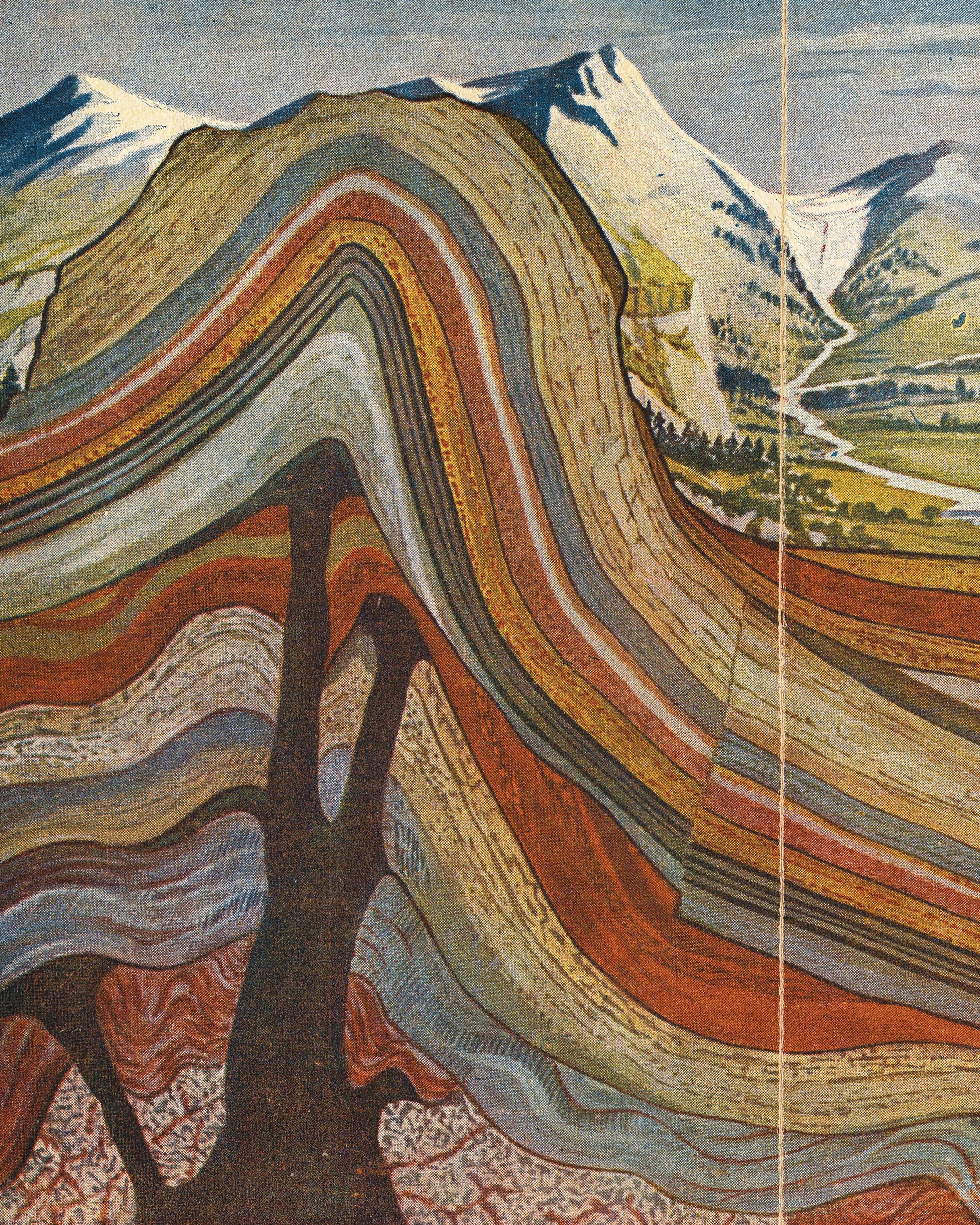
Campaign image for THE EARTH IS THINKING ALL ALONG..., by Minhu Jun.
CRITIQUE AND THE CRITIQUED
The ecological crises as we witness them ourselves, but primarily how mass media present them to us, register only a fraction of the transformations that are reshaping the Earth today. Western-owned and calibrated to the flows of capital that initiated the damage in the first place, the critique posed by mass media is most often in line with the critiqued. It asks the Majority World, or Global South, to answer questions posed in and by the centres of the Global North, and it studies the more-than-human world primarily in terms of its changing service to human survival. Apart from all highlighted and not so highlighted developments, our meagre understanding of the state of the Earth today is also because so many of the undercurrents that changed their course are deeply hidden in the Black Earth: subterranean strata of mineral, microbial, and processual activity in which other timelines, other wagers, other experiments take place. We should not be too surprised, when the unknown and the impossible will be realised soon.
The good news is that the Earth has been through quite a few of these all encompassing changes, and it has always found new ways to survive. It always realised new routes for living, and consequently new forms of life. The bad news is that the coming routes are, most likely, not ours to walk. It can very well be that humans cannot be a part of this Earth to come.
Changing, once again, the fabric of life, in degree and in kind, will be the Earth’s way of persevering in being, of persisting.
THE NETHERLANDS AND US…
The liquid Earth that we find ourselves in, here, in the Netherlands, offers a particularly telling scene for rethinking the relation between psyche, land, and sea. For centuries, the lakes and marshes at the heart of what would become the Low Countries—Flevo, Almere, later the Zuiderzee—were experienced as a dangerous remainder of the last ice age, an unstable memory of glacial waters that could at any moment return to flood the villages in the swamps and forests between sea and river. Over time, hydraulic engineering and windmill technologies allowed pioneers like Johannes Leeghwater to drain lakes, reclaim polders, and extend cultivable land. Especially Holland remained—as Pliny already intuited a strip between Helinium and Flevum (inter Helinium ac Flevum)—a fragile in-between always at risk of being swallowed by the waters again.
The decision to close off the South Sea with the Afsluitdijk and transform it into a manageable lake in the twentieth century marked a new phase in this long negotiation between humans and water: a vast cultural operation to still the waves, erase tides, and overwrite a restless aquatic history with the promise of control, safety, and permanence.
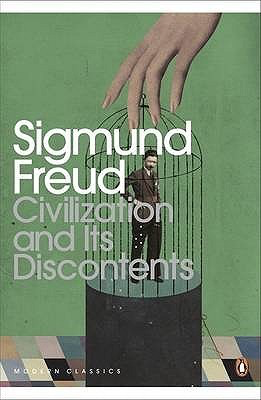
Sigmund Freud visited the Netherlands at precisely the moment this monumental project was underway. He had a pronounced fascination with Dutch landscape painting—Ruisdael, Cuyp, Rembrandt—which, as he sensed, did not simply depict wild ‘nature’ but celebrated the technoscapes of dikes, canals, and reclaimed fields: a land literally scaped by human hands. Moving through the polder canals on rented boats, Freud observed at close range how the ‘battle against the water’—that telling Dutch idiom—was turned into a programme of rational water management: flooding rivers channelled, surplus water redirected, wetlands drained. In Civilization and its Discontents (1930/1961) he would translate these impressions into a definition of culture as the ensemble of achievements and institutions that protect humans from nature and regulate relations between humans.
He explicitly compared such cultural labour to the drainage of the Zuiderzee: ‘Where Id was, there Ego shall be. It is cultural work… roughly akin to the drainage of the Zuiderzee’.
The process of thinking, as studied in psychoanalysis, equals Dutch hydrological engineering: both seek to secure a critical distance between the ego and the unruly, flooding forces—whether drives or waters—that threaten to dissolve it.
Yet if we follow Freud’s Dutch encounters a little further, they also disclose something that exceeds this humanist project of control. The very need to drain, dike, and discipline the delta testifies to a land-sea assemblage that thinks and acts on its own terms: shifting lakes into seas, re-routing river mouths, fabricating and erasing islands through the patient, incessant labour of currents, sediments, winds, and tides. In Freud’s equation, the Zuiderzee becomes the image of a threatening Id to be mastered; but from a geophilosophical perspective, the Dutch delta brings together waves, sedimentation and coastal formations that allow for more-than-human life to live, for material and immaterial harmonies and melodies, for unforeseen more-than-human nuptials and transcodings.
THINKING WITH OTHER INTELLIGENCES
In recent years, biologists such as Daniel Chamovitz have begun to chart the ways in which plants think and communicate, tracing forms of responsiveness and decision-making that do not resemble our own, yet are no less real.
Plants are not only ‘sentient’ as Darwin already suggested; they also, in a very real sense, know.
This knowing does not depart from a brain, from cognition, or consciousness in any human sense, but from what we might call affect: a distributed capacity to register and modulate relations.
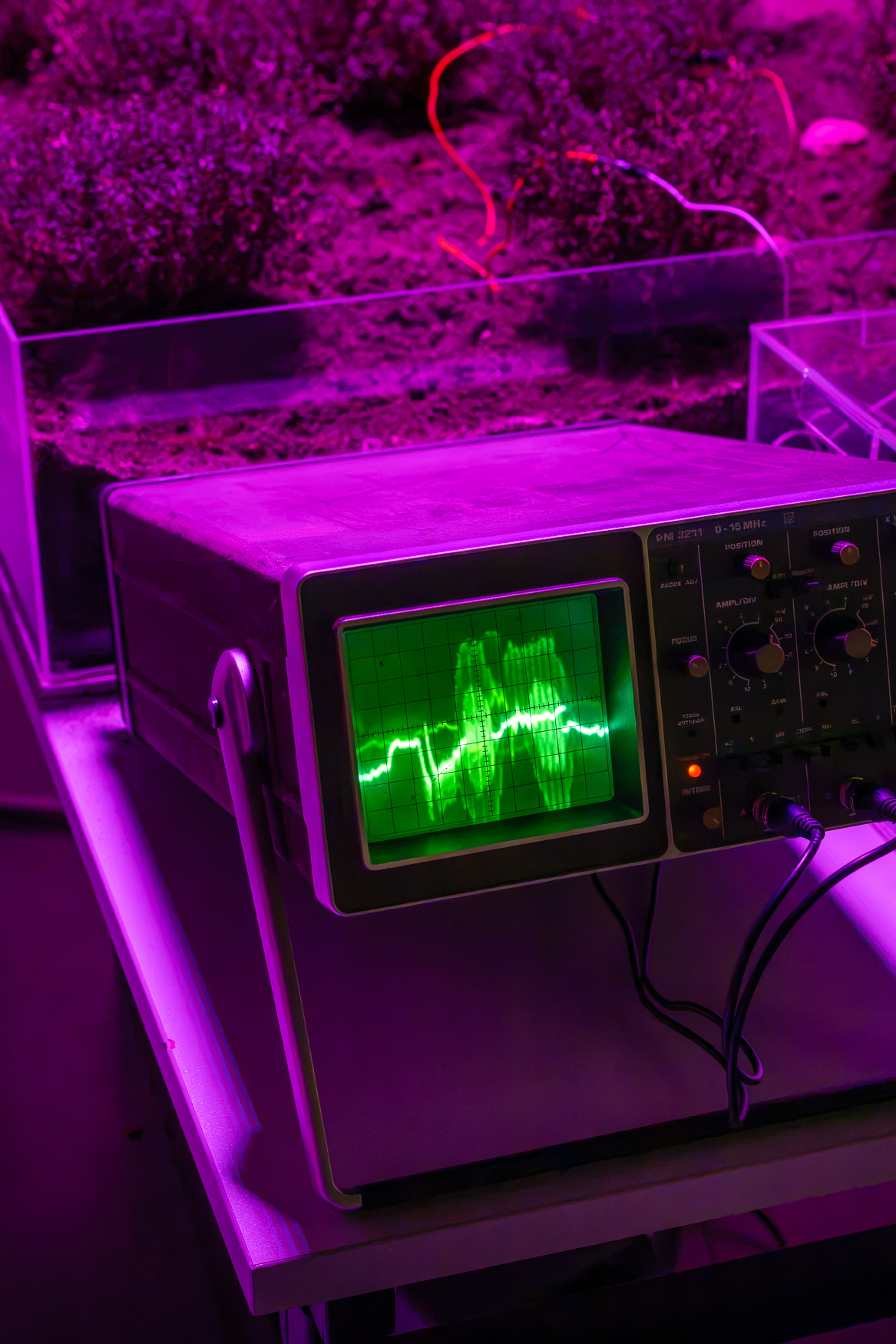
Plants respond to aromas that surround them, to touch, to gravity; they inhabit and adjust to their environments and, they remember their own past.
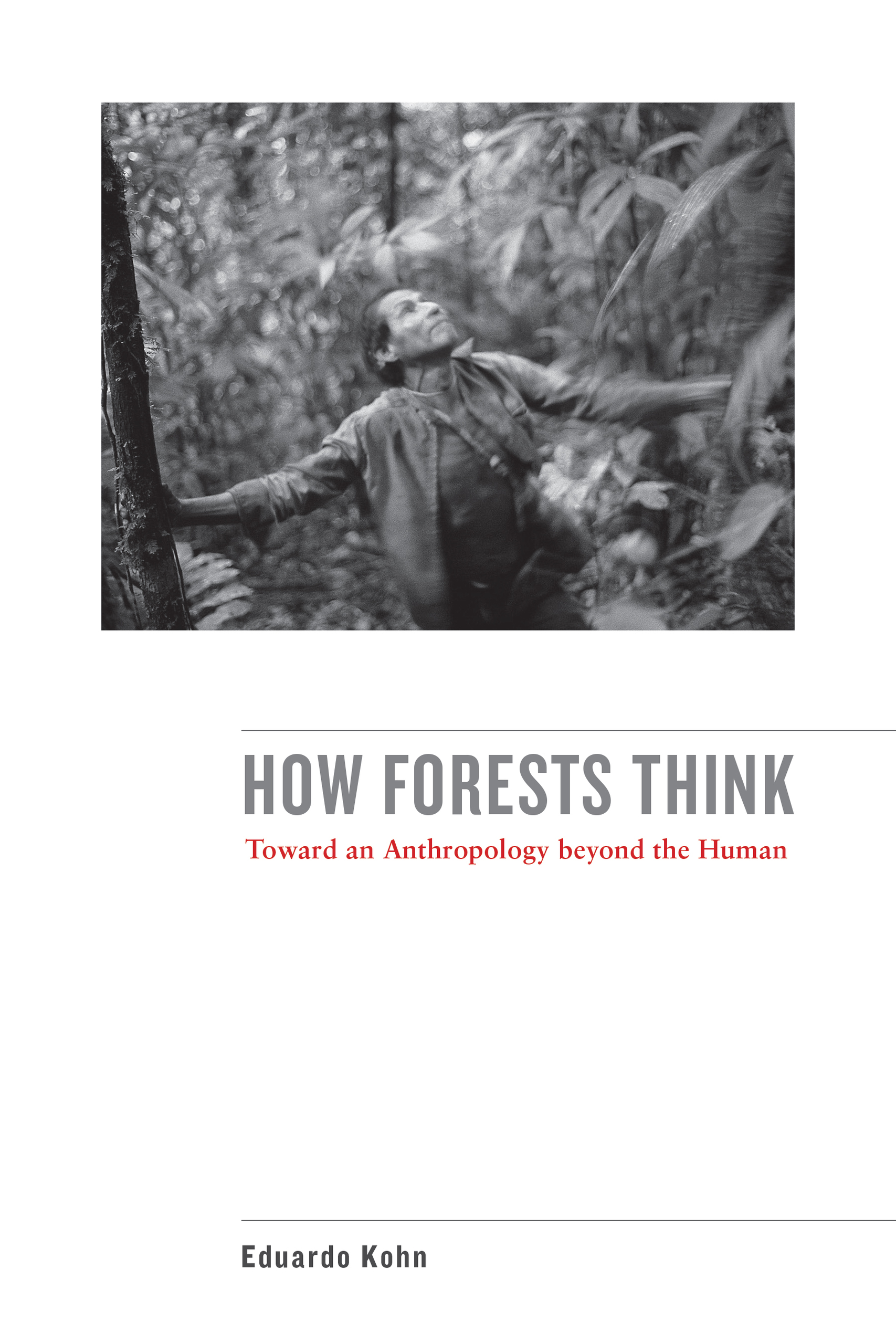
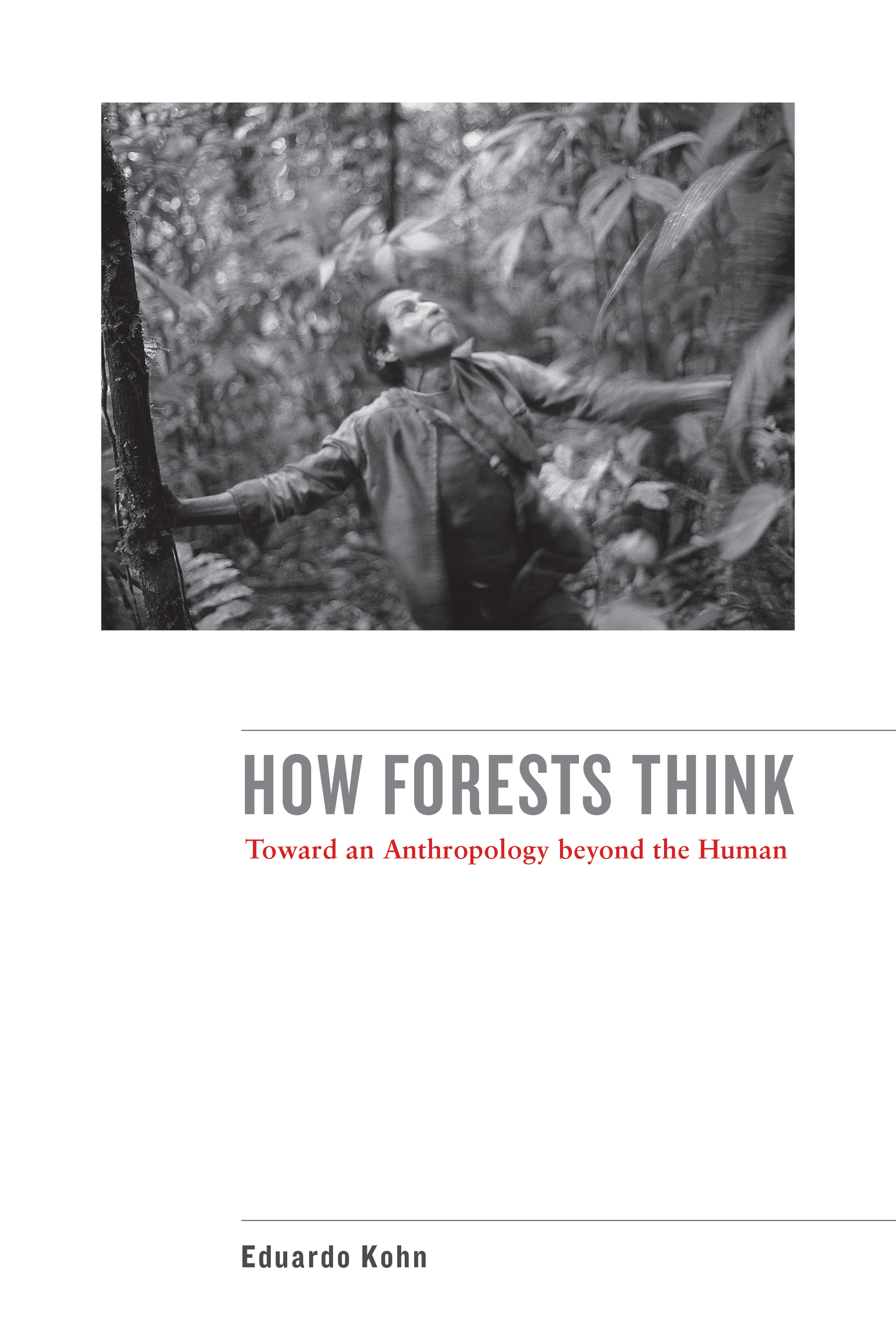
Anthropologists such as Eduardo Kohn, increasingly attentive to Indigenous knowledges, document forests that dream and converse, mountains that advise, rivers that listen and respond. On the basis of long-term research in the Amazon (near Ávila) and close listening to so‑called tribal and primitive forms of knowledge, Kohn analyses how the forest thinks, developing an anthropology rigorously committed to lives and minds beyond the (Western) human. He is not a traditionalist, nor does he idealise a lost past; rather, he shows how our present is already entangled with ‘pets, weeds, pests, commensals, new pathogens, “wild” animals, or technoscientific “mutants”…’.
Perhaps, then, we should stop treating tribal, ‘primitive’ and traditional societies as images of our past—a very Modern gesture—and begin instead to recognise them as figures of our only possible future.
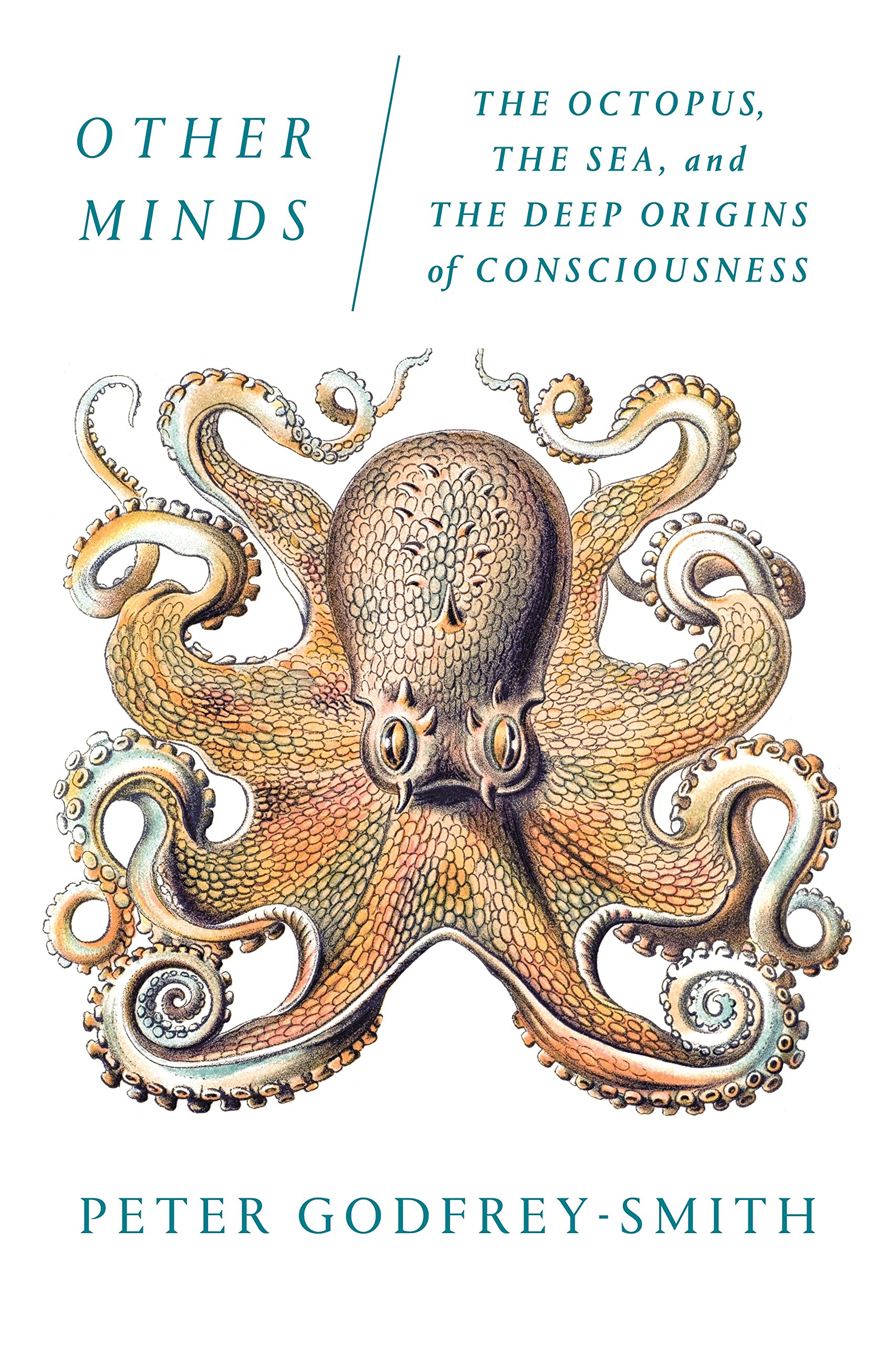
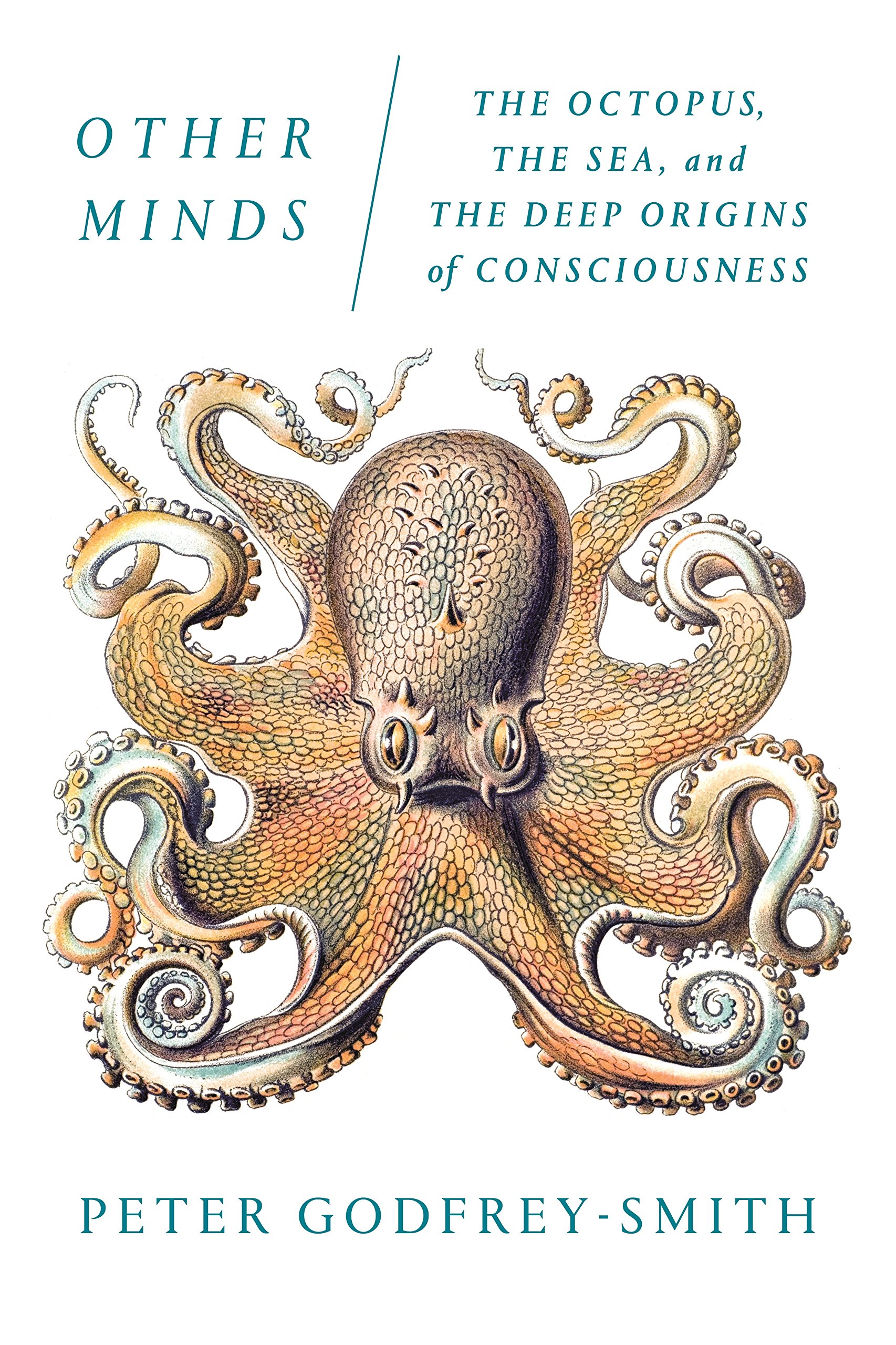
Philosophers, meanwhile, increasingly turn to the intelligence of octopuses, dolphins, and crows—beings whose ways of knowing are radically distinct from ours yet no less intricate. Distributed across eight semi‑autonomous arms, the octopus’s body‑wide cognition unsettles the identification of mind with a central brain.
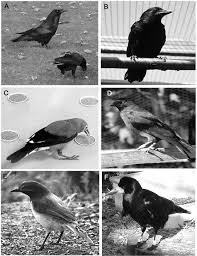
Dolphins, with their complex social lives, large and highly folded brains, and evident capacity for play, grief, and self‑recognition, raise uncomfortable ethical questions about what kinds of beings we have been willing to treat as objects. Corvids such as crows and ravens fashion and cache tools, remember faces, and plan for possible futures, demonstrating forms of strategic, inventive intelligence that rival those of primates.
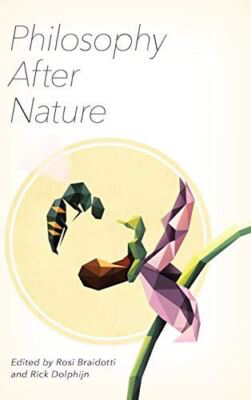
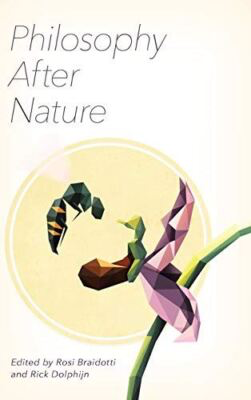
Elsewhere, in my book Philosophy After Nature I return to a debate in Nature on the cubozoan box jellyfish, an animal without a central brain that nevertheless navigates mangrove swamps using image‑forming eyes and learned avoidance. This debate forces philosophy to concede that sensing, evaluating, and remembering do not belong to cortices alone.
Together, these nonhuman thinkers make it impossible to maintain an image of thought confined to the human or human cortex. They invite us to imagine a plurality of minds, each knotted into the worlds it inhabits and the relations it composes.
Don’t all these more-than-human forms of thinking, in the end, lead us back to the very Earth itself? The black surface that sustains us, that begets the full spectrum of life, for eons have generated tangled, astonishingly complex ecosystems, organic and nonorganic, material and immaterial. The Earth-as-ever-in-change appears as a vast, shape-shifting medium of thought in which octopus, dolphin, crow, plant, river, forest, and human are all partial expressions. Over geological time, this medium has absorbed asteroid impacts, volcanic winters, global glaciations, and at least five mass extinctions, each of which has devastated existing worlds while opening unforeseen niches and circuits for new life. Life has rebounded after every such event, often with even greater diversity and complexity, suggesting not a benevolent Gaia that protects us, but a restless, transversal, experimental Earth-system that continually reworks and rethinks the conditions of existence. What now appears to us as planetary catastrophe—runaway climate change, collapsing ice sheets, the sixth mass extinction—may be legible, from an Earth’s-eye view, as just another episode of radical recomposition: a rephrasing of matter and relation that neither waits for, nor centres, the human.
THE EARTH IS THINKING ALL ALONG… A GEOPHILOSOPHICAL TRAVELOGUE
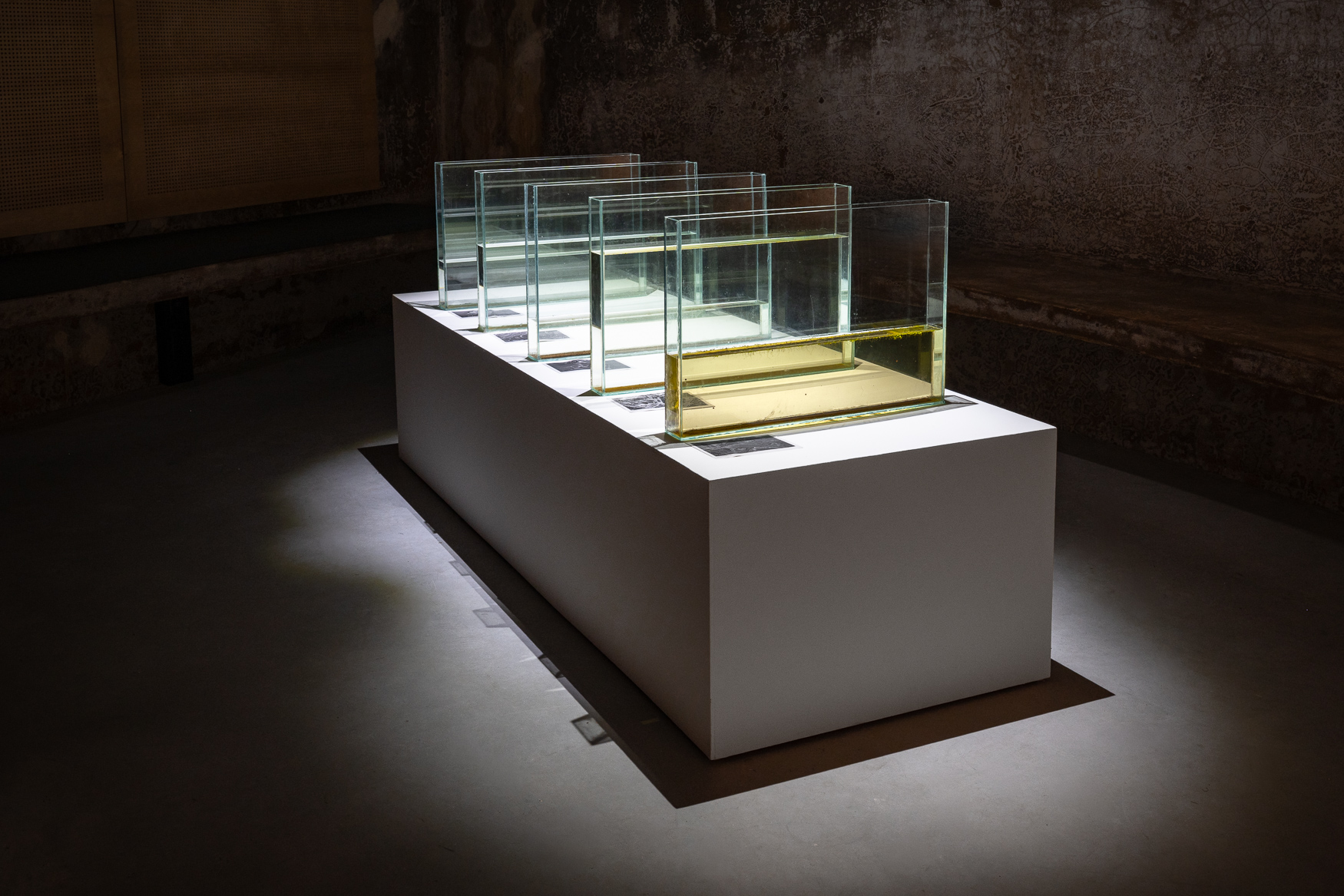
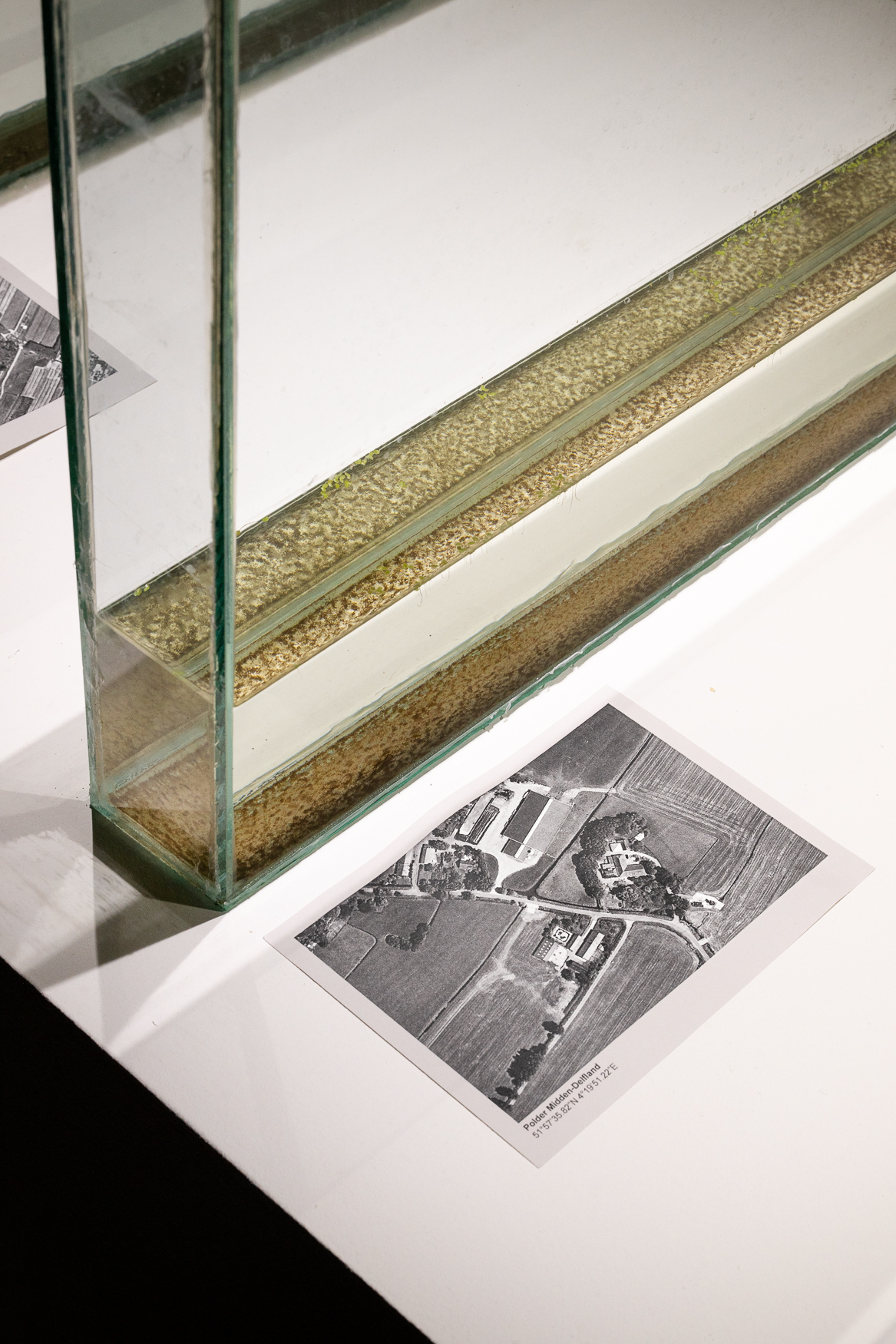
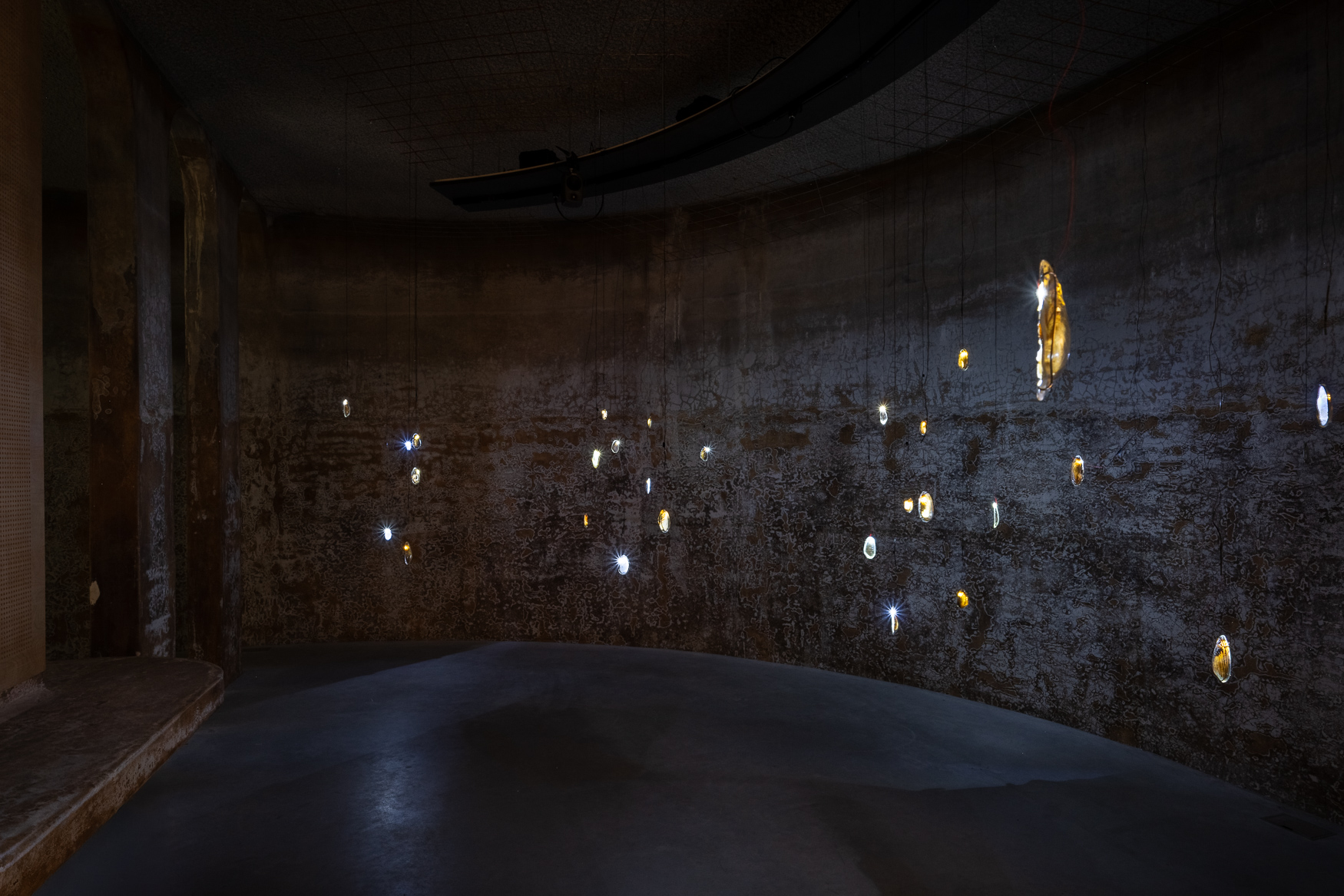
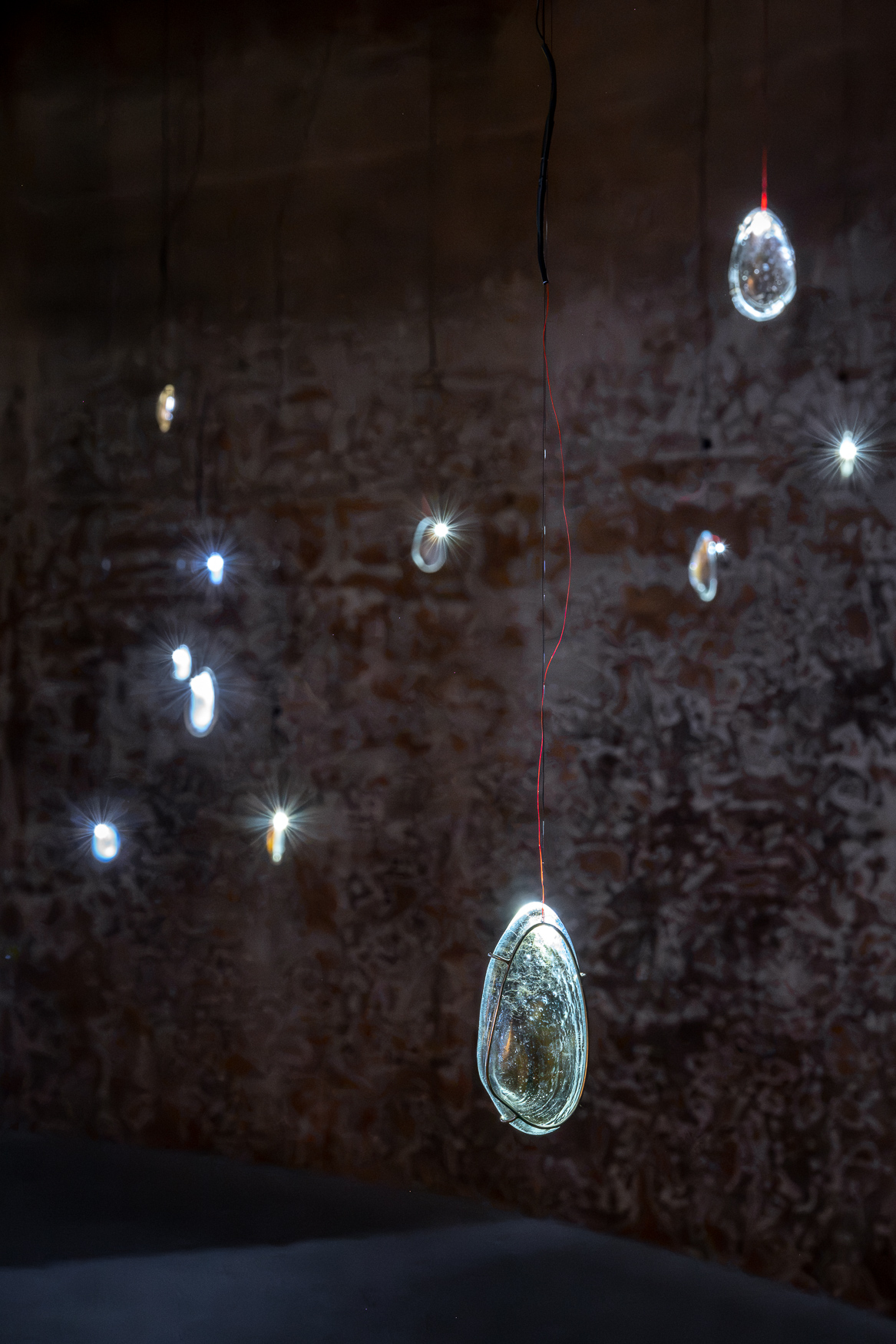
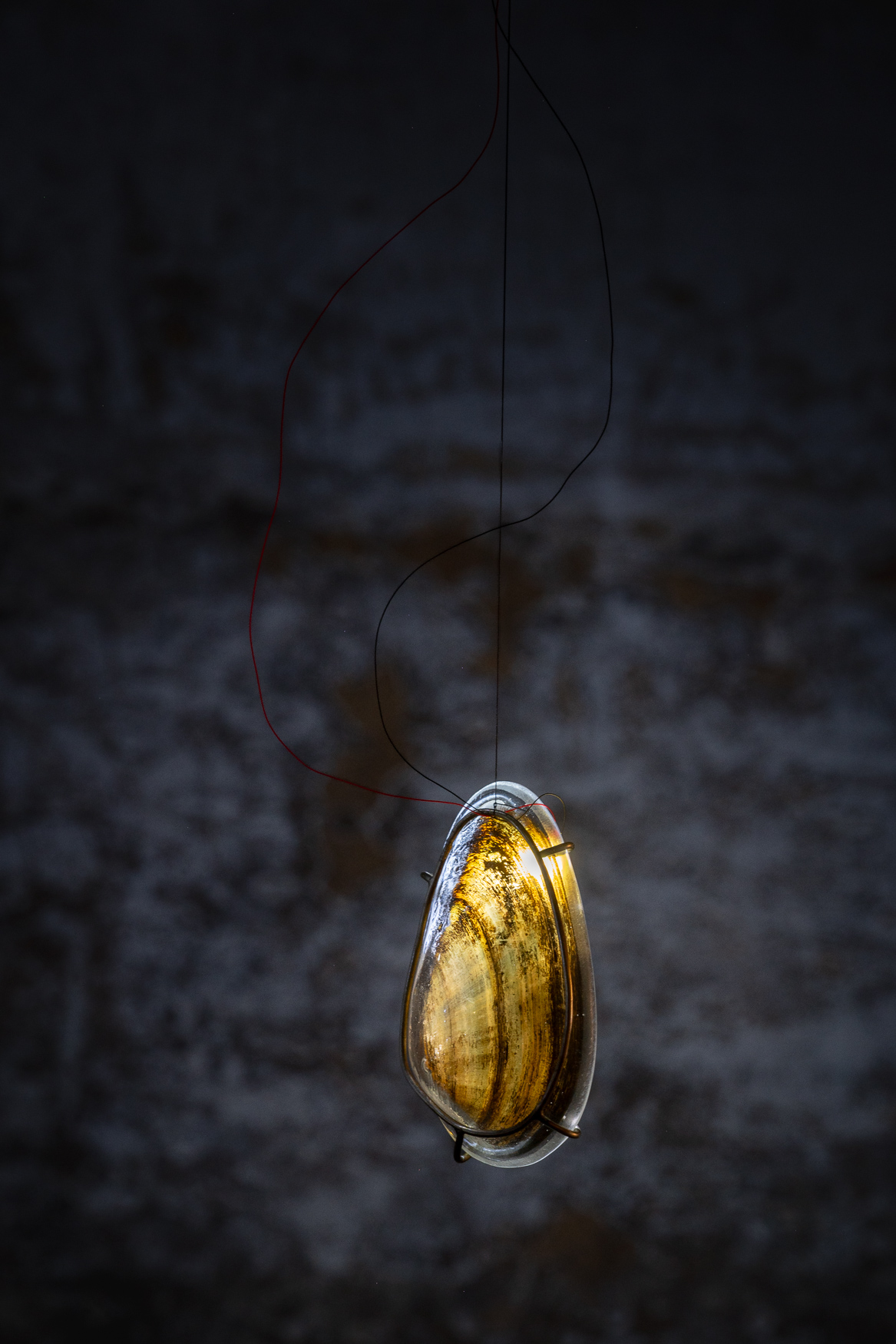
This exhibition does not offer a programme for survival, nor does it claim that art and philosophy wil solve the crises addressed. Its wager lies elsewhere. It asks whether we might begin to recompose a form of empathy between the Earth and us: a capacity to sense‑with rather than speak about the planet for our own sake. This requires a shift in attention toward what matters to more‑than‑human life: to ecologies in transition, to the shifting fabrics of reality we already struggle to comprehend, and to the scales and speeds at which the Earth thinks. The Dutch delta, with its drained seas and subsiding polders, is one of the places where this tension between control and planetary agency has been written most insistently into the ground. It reverberates quietly through the exhibition, mirroring back at us through the shiny surfaces of the mussels at the center in the work of Xandra van der Eijk. These surfaces, as well as others, invite us—not from a position of mastery, but from a position of exposure—to think along.
THE EARTH IS THINKING ALL ALONG… is conceived as a creative geophilosophical travelogue. It offers a series of entry points into what I call a philosophy of land: situated experiments inviting us to sense how earth, water, air, and fire think together with plants, animals, infrastructures, spirits, and machines. In this exhibition, seven philosophers from across the globe enter into dialogue with artists with whom they felt a strong resonance in thinking the Earth. Together, they experiment, map, and speculate in situ, situating themselves in land and water, listening for how art and philosophy can assume responsibility for the Earth together.
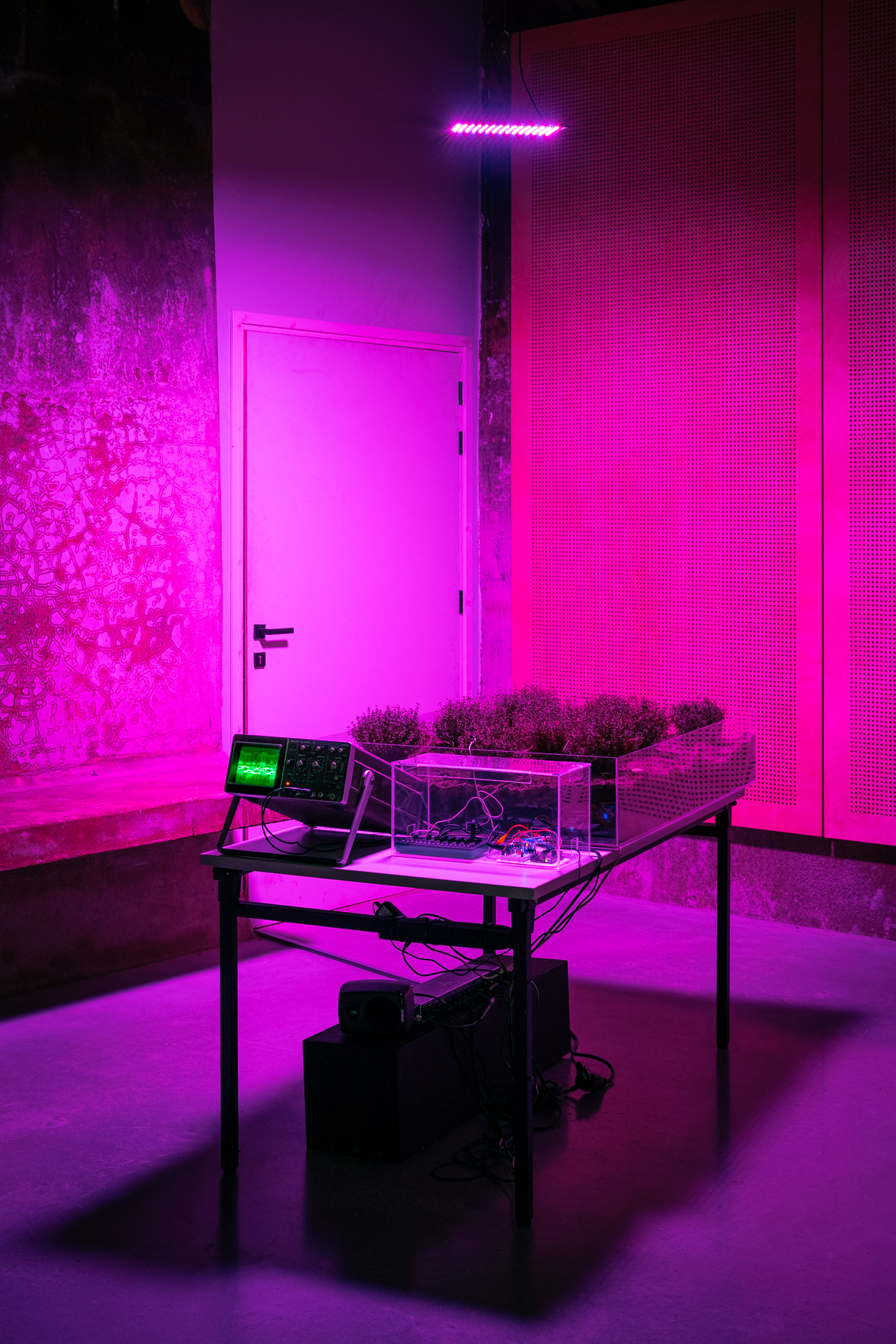
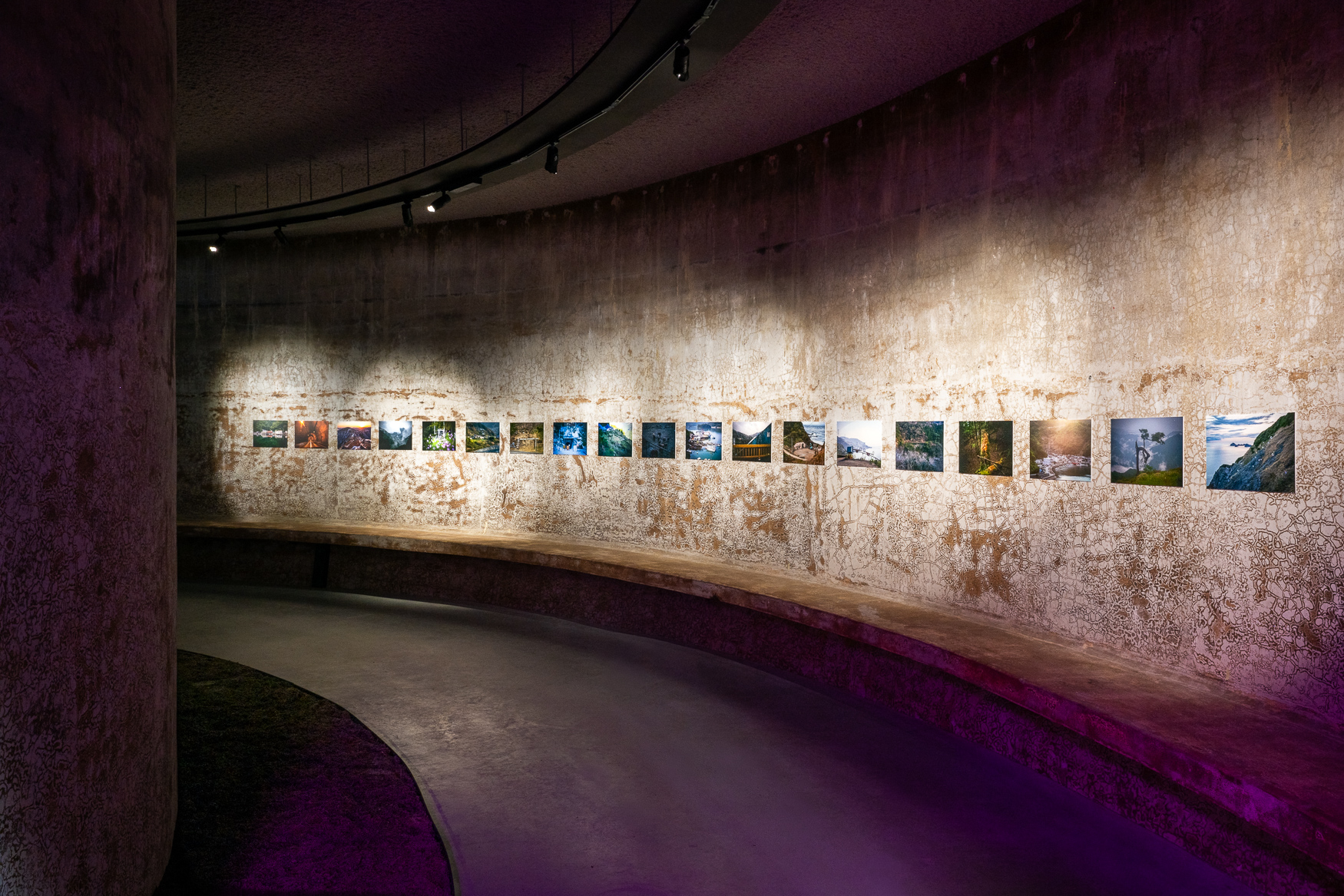
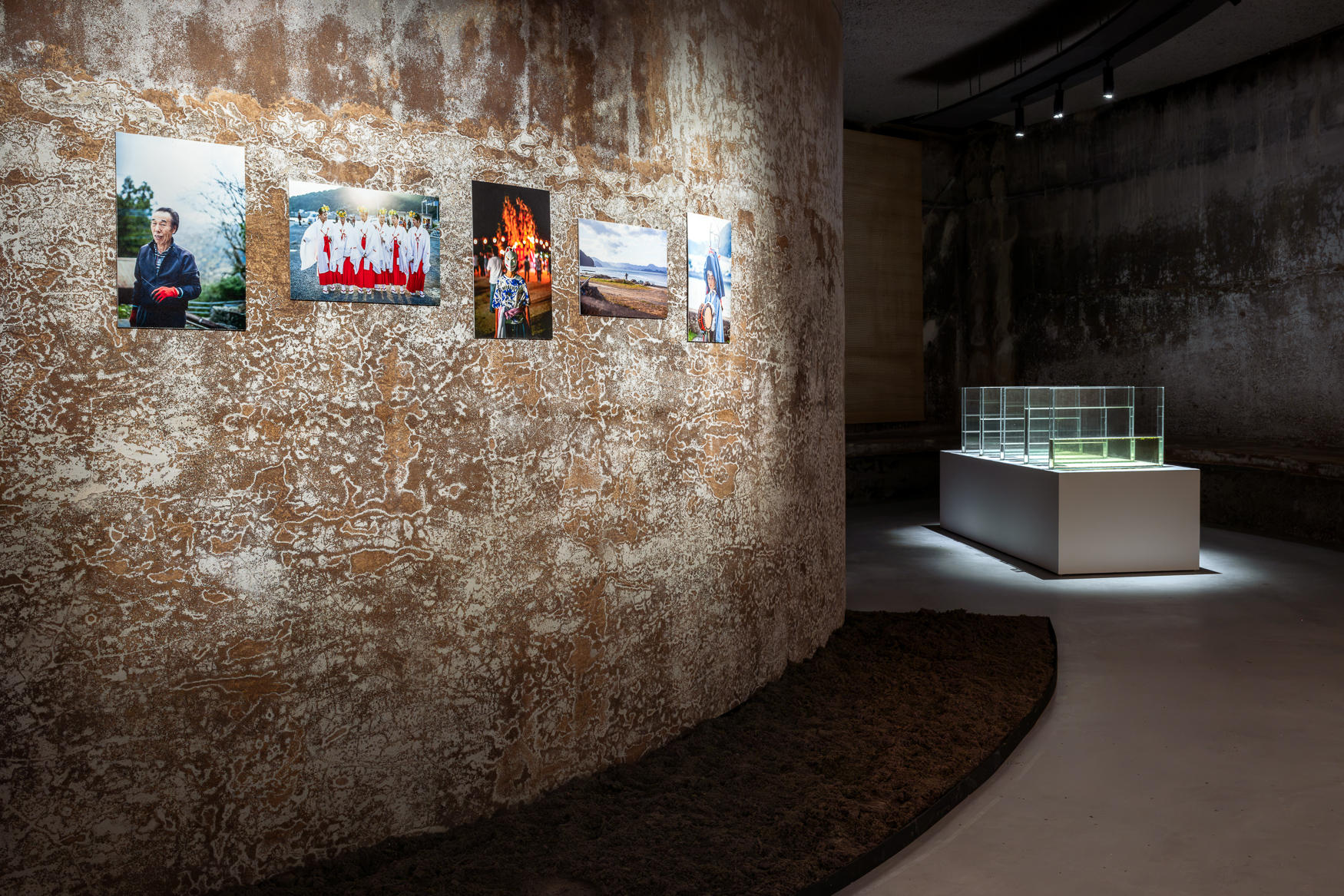
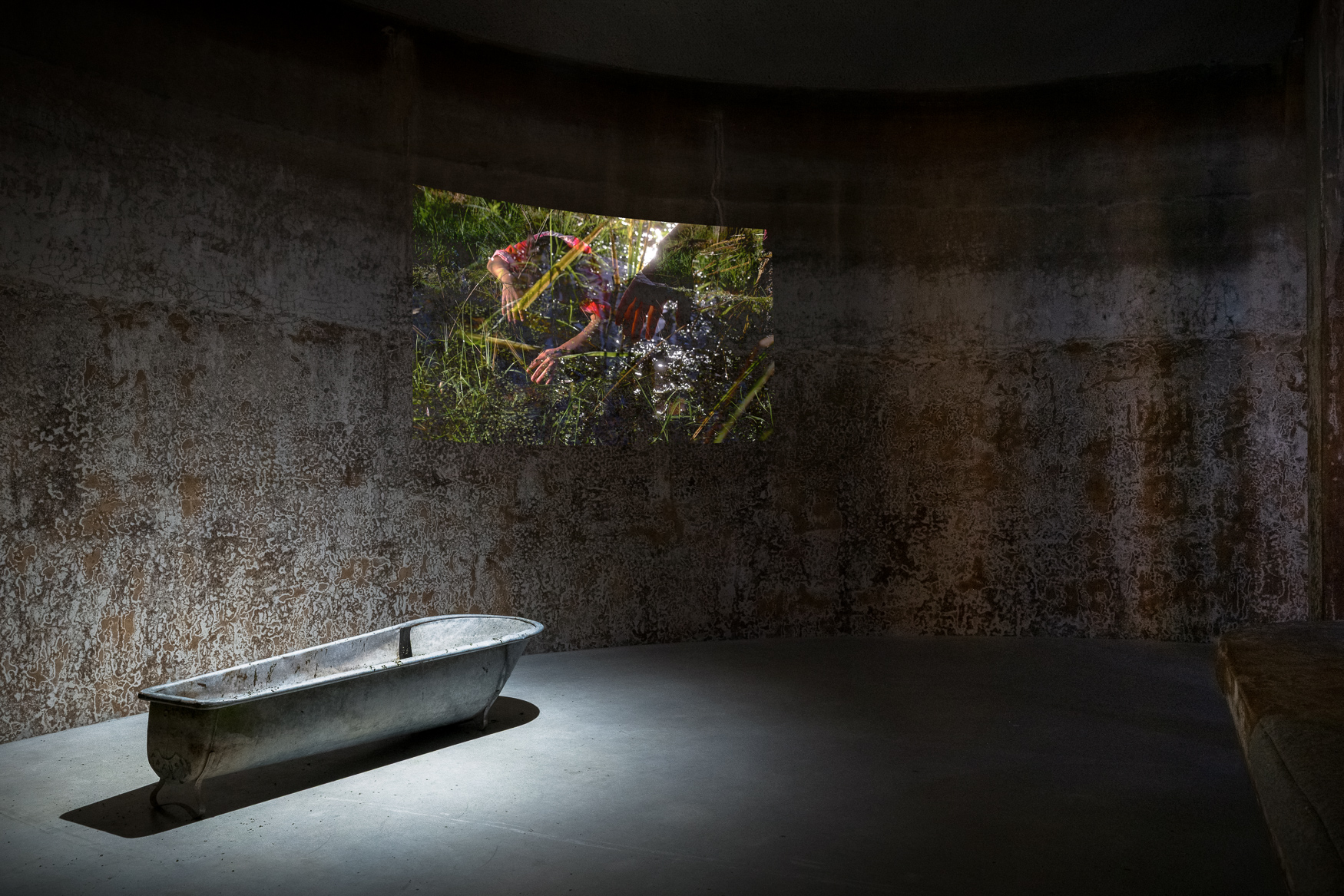
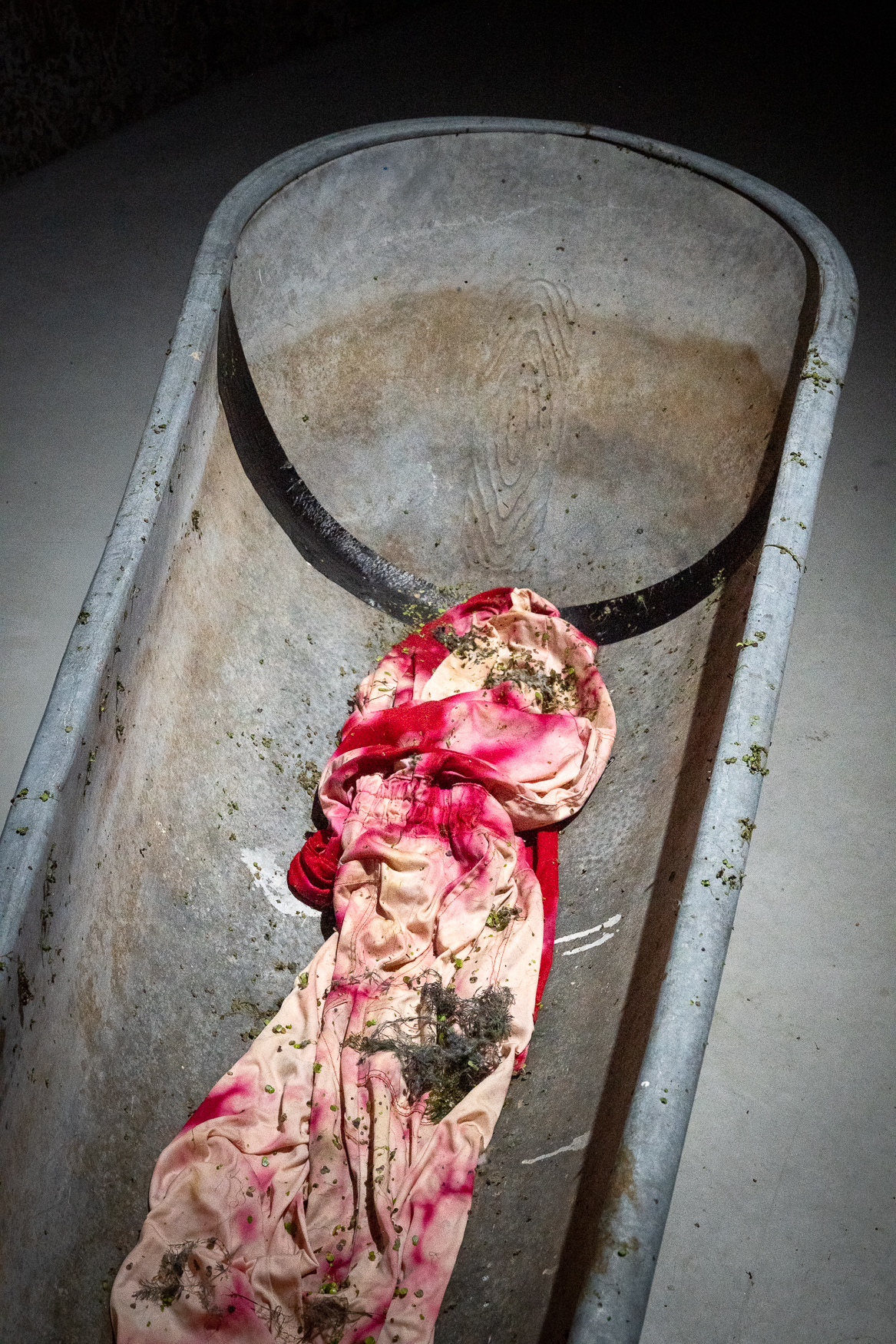
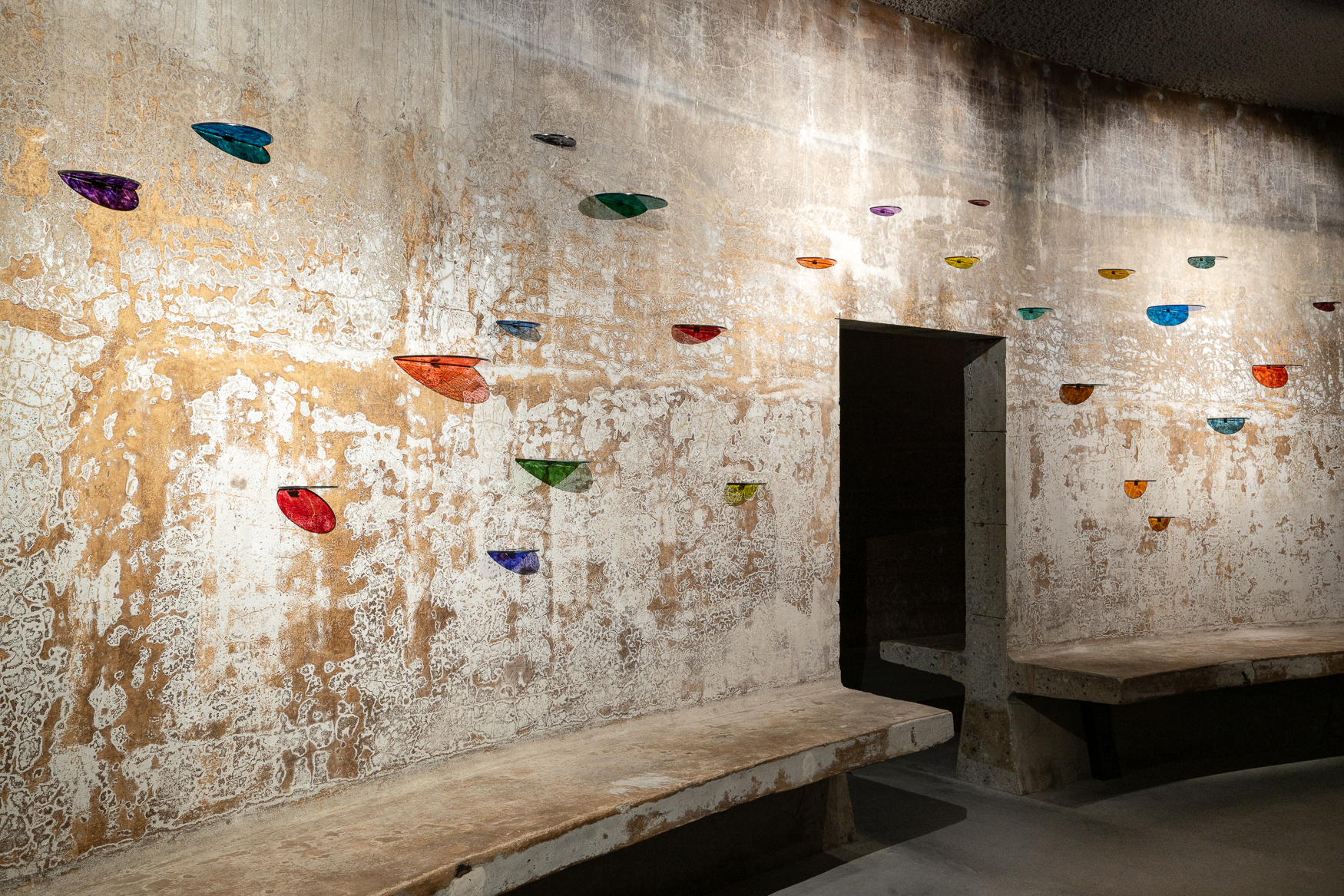
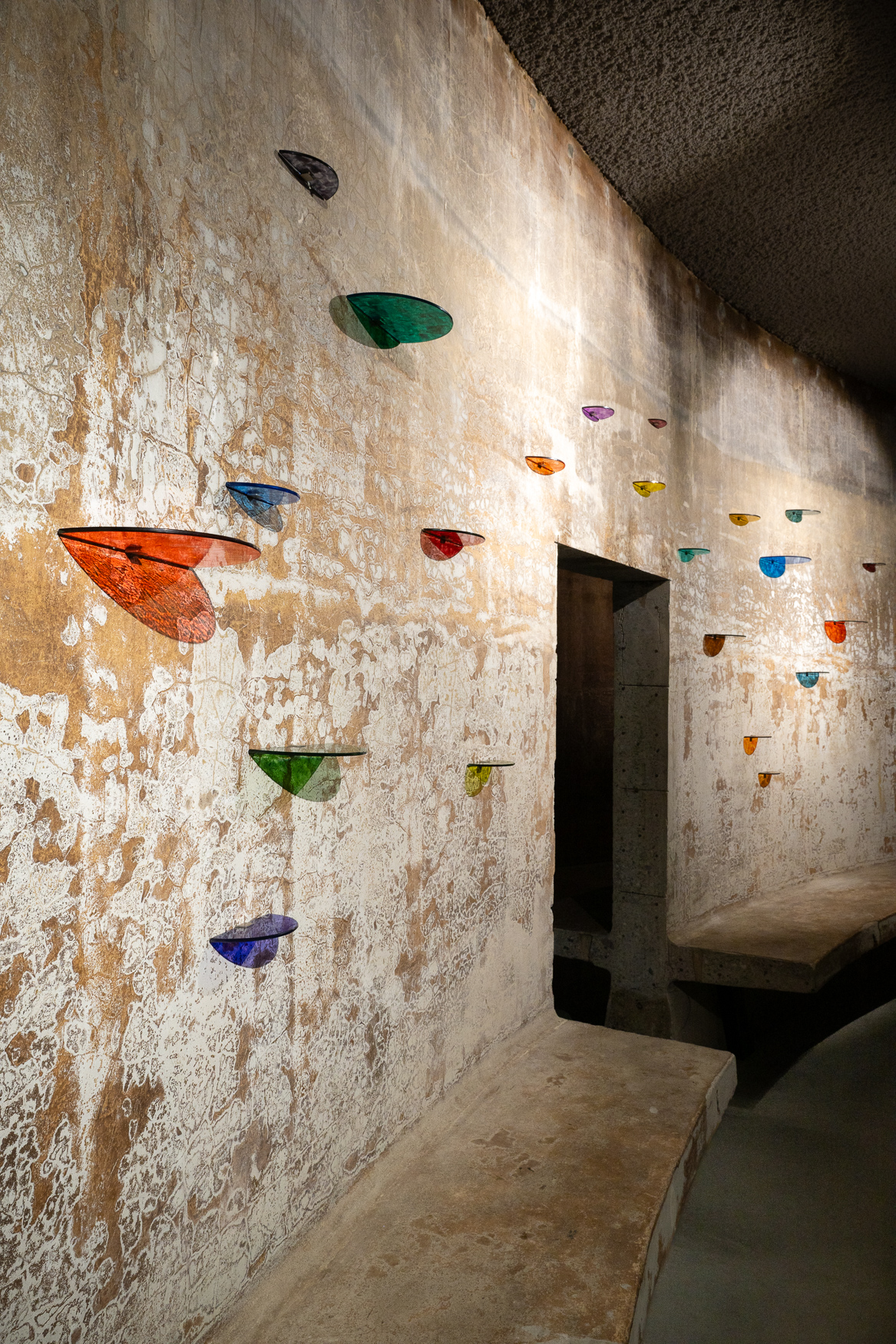
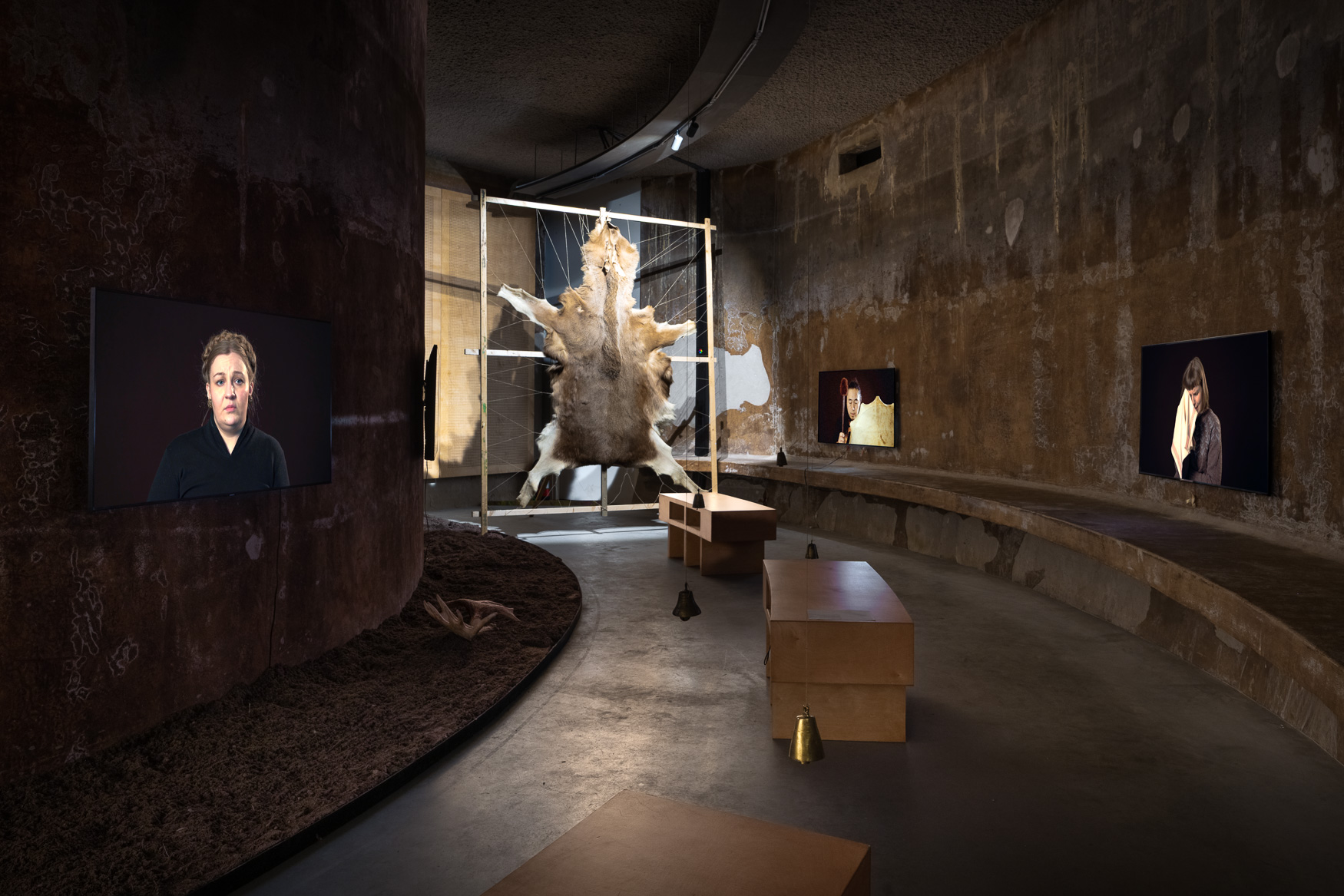
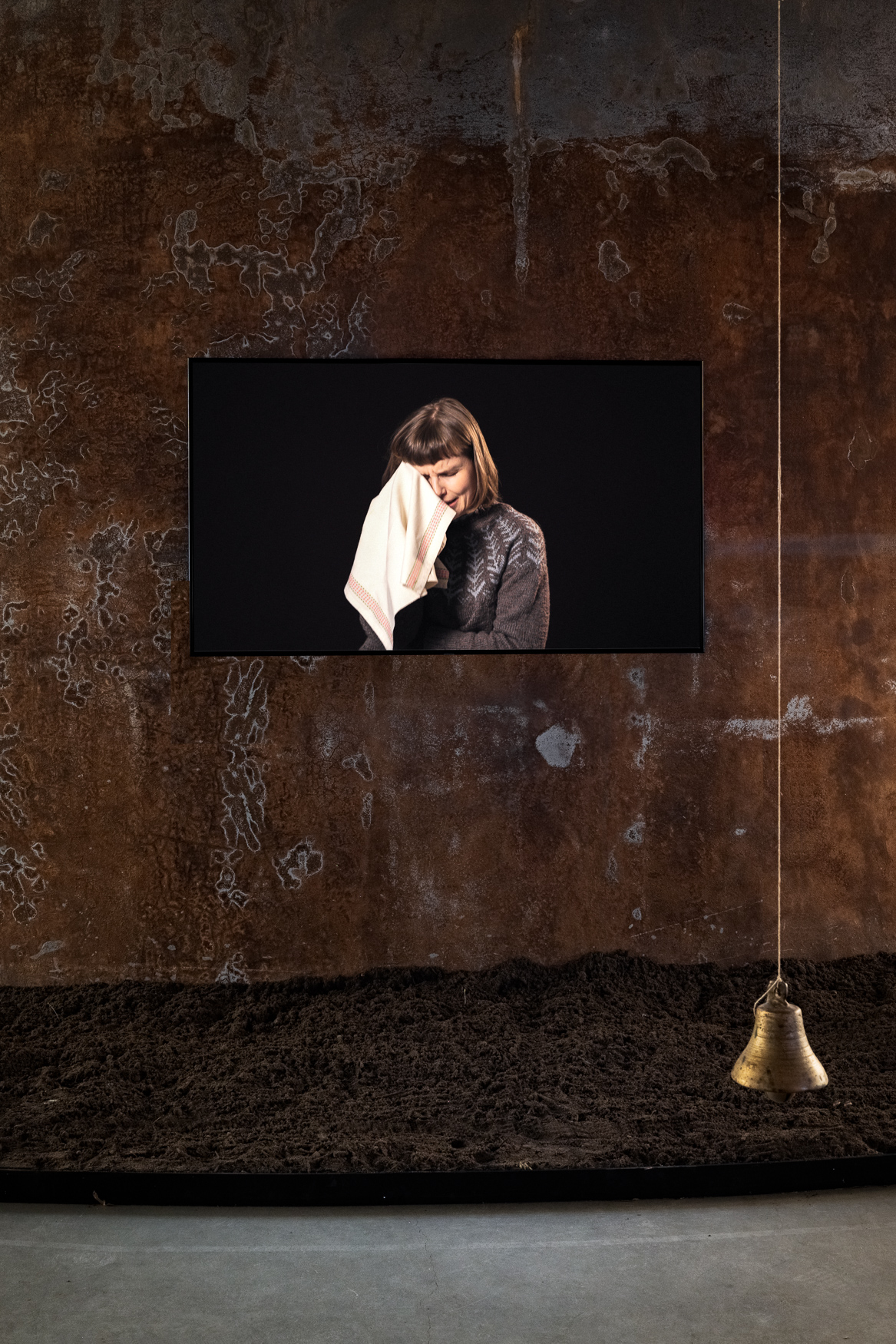
At RADIUS—a subterranean centre for contemporary art and ecology situated in the former pump house and underground water basin of the Delft water tower—the exhibition unfolds below ground, in an architecture shaped by water, pressure, and circular geometries. The site functions as an earthly diagram of how infrastructures tune and distribute life: pumping, storing, and circulating the waters on which the more-than-human city depends. From this setting, the exhibition rises from soil, sound, scent, gesture, and image. There are earths hovering above us, ideal circular forms that shift colour each time light touches them. At the same time, the soil is scattered underfoot: its smell, its blackness, its unbound power to begin new life accompany the visitor’s movement through the curved spaces. Sound installations attune our ears to planetary vibrations and more‑than‑human rhythms. Works draw on songs from shamanic and animist practices in Manchuria and Inner Mongolia, on performed Baltic and brackish waterscapes, on images of Japanese islands and the ever‑changing lives they stage, and on plant life whose tactile and acoustic presence unsettles the perceived border between environment and body. And water—which is never one thing—as it carries through the exhibition and most of the artworks, in a dense mixture of life and death, of potentialities that flow in every direction. The aim is to open a field in which philosophers, artists, and visitors, the more‑than‑human world and the elements themselves can enter into a thoughtful relation. Here, in the dim unfolding of an underground basin, we are invited to reimagine the dimensionalities and directionalities that engage us with the earth‑in‑thought‑in‑movement‑in‑change.
THE EARTH IS THINKING ALL ALONG… engages with frictions, asymmetries, wounds and misalignments between ways of knowing, sensing, and articulating the Earth. In the interstices and enfoldings of all that matters here—between soil and sound, text and vibration, speculation and sediment—new dialogues and negotiations must be set up as a new Earth makes itself heard. The question is not whether we can restore a lost equilibrium, nor whether we can preserve a stable climate calibrated to human comfort. The question is whether we can begin to recognise and think along with the thoughts of the Earth today, accepting that these ideas may appeal to us, exceed us, ignore us, invite us, or move on without us.
Paul-Laurent Assoun, ‘Freud et la Hollande’, in En Analyse avec Freud, ed. Harry Stroeken (Paris: Payot, 1987), 203-205.
↩
Sigmund Freud, Civilization and Its Discontents, trans. James Strachey (London: Hogarth Press, 1961).
↩
Sigmund Freud, New Introductory Lectures on Psycho-Analysis, trans. James Strachey (London: Hogarth Press, 1964).
↩
Daniel Chamovitz, What a Plant Knows: A Field Guide to the Senses(New York, NY: Farrar, Straus and Giroux, 2017).
↩
Charles Darwin, The Power of Movement in Plants, (Cambridge: Cambridge University Press, 2009).
↩
Michael Marder, Plant-thinking: A Philosophy of Vegetal Life(New York, NY: Columbia University Press, 2013).
↩
Eduardo Kohn, How Forests Think: Toward an Anthropology Beyond the Human(Oakland, CA: University of California Press, 2013).
↩
Peter, Godfrey-Smith, The Octopus, the sea, and the Deep Origins of Consciousness(New York, NY: Farrar, Straus and Giroux, 2016).
↩
Nathan J. Emery and Nicola S. Clayton, ‘The Mentality of Crows: Convergent Evolution of Intelligence in Corvids and Apes’, Science 306 (2004): 1903-190.
↩
Philosophy after nature, eds. Rosi Braidotti & Rick Dolphijn (Lanham, MD: Rowmand & Littlefield, 2017).
↩
Guest curator: Rick Dolphijn.
The RADIUS 2026 year-programme YOU AND I ARE EARTH, of which this exhibition is a part, has been made possible with support from the Mondriaan Fund, the Municipality of Delft, BNG Cultuurfonds, and the Van der Mandele Stichting.
This exhibition is additionally supported by Utrecht University, BPD Cultuurfonds, Pauwhof Fonds, Gilles Hondius Foundation Institutions for Open Societies, More-than-Human Studies Lab. We thank them kindly for their support!
 He explicitly compared such cultural labour to the drainage of the Zuiderzee: ‘Where Id was, there Ego shall be. It is cultural work… roughly akin to the drainage of the Zuiderzee’.
  The process of thinking, as studied in psychoanalysis, equals Dutch hydrological engineering: both seek to secure a critical distance between the ego and the unruly, flooding forces—whether drives or waters—that threaten to dissolve it.
 Plants are not only ‘sentient’ as Darwin already suggested; they also, in a very real sense, know.
  This knowing does not depart from a brain, from cognition, or consciousness in any human sense, but from what we might call affect: a distributed capacity to register and modulate relations.
  Plants respond to aromas that surround them, to touch, to gravity; they inhabit and adjust to their environments and, they remember their own past.
 Perhaps, then, we should stop treating tribal, ‘primitive’ and traditional societies as images of our past—a very Modern gesture—and begin instead to recognise them as figures of our only possible future.
 Dolphins, with their complex social lives, large and highly folded brains, and evident capacity for play, grief, and self‑recognition, raise uncomfortable ethical questions about what kinds of beings we have been willing to treat as objects. Corvids such as crows and ravens fashion and cache tools, remember faces, and plan for possible futures, demonstrating forms of strategic, inventive intelligence that rival those of primates.
  Elsewhere, in my book Philosophy After Nature I return to a debate in Nature on the cubozoan box jellyfish, an animal without a central brain that nevertheless navigates mangrove swamps using image‑forming eyes and learned avoidance. This debate forces philosophy to concede that sensing, evaluating, and remembering do not belong to cortices alone.
  Together, these nonhuman thinkers make it impossible to maintain an image of thought confined to the human or human cortex. They invite us to imagine a plurality of minds, each knotted into the worlds it inhabits and the relations it composes.