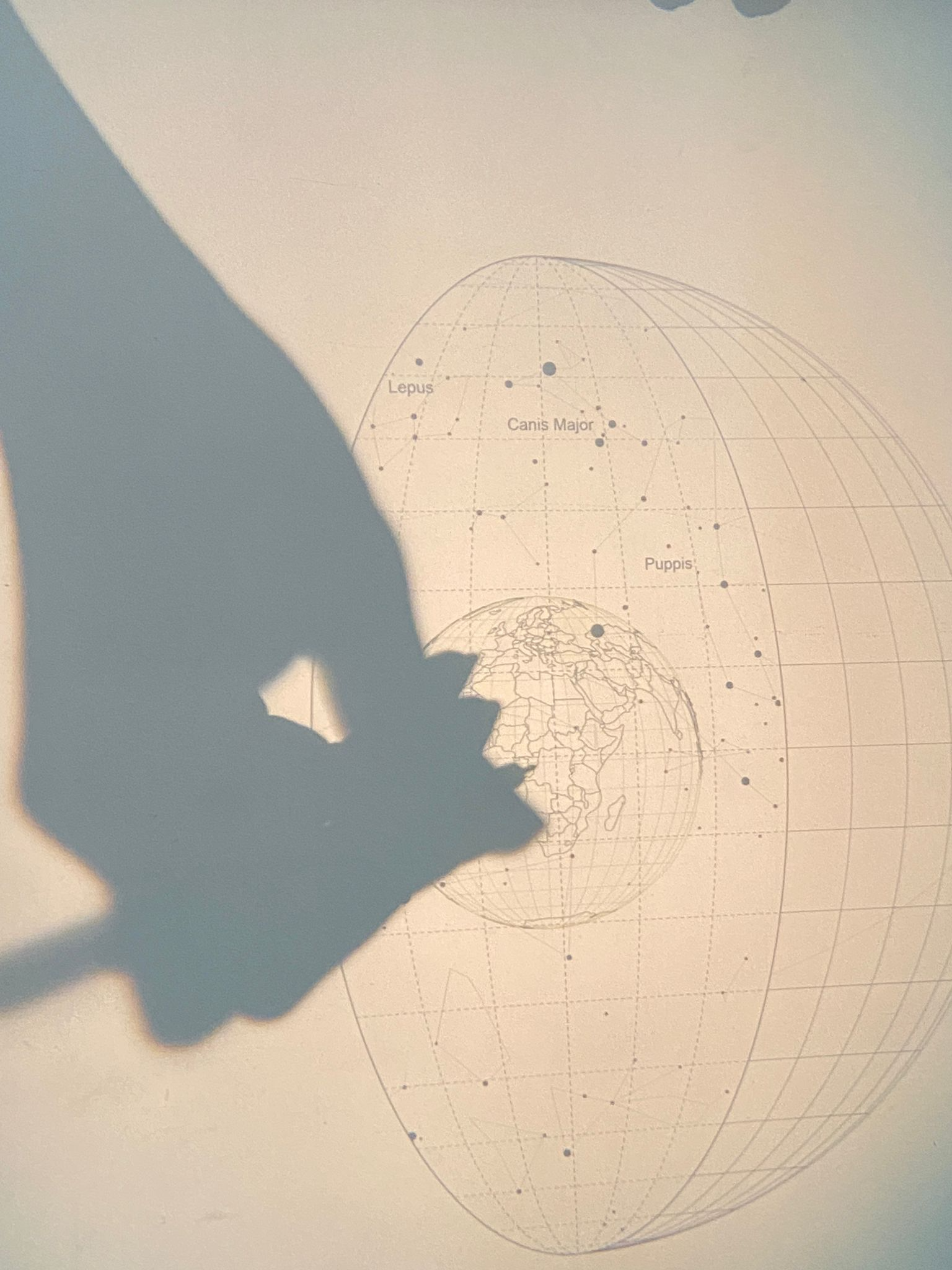
RADIUS is pleased to present THE NIGHT THAT DREAMS — COSMOLOGIES OF SCALE, a solo exhibition by Miriam Hillawi Abraham. This exhibition marks a new iteration in her longstanding research on pre-colonial African cosmologies. This body of work studies and draws constellations between African cosmologies and spatial orders as multi-scalar repositories of lived knowledges and world-building traditions. Working intersectionally, she seeks to uphold the rich tapestry of African cosmologies whilst complicating Western colonial legacies, which have long dictated their (mis)understanding. Against a backdrop of Western canonical bias, standardisation and homogeneity, Abraham’s work is an expansive offering to know, practice, and imagine otherwise in reclaimed agency over ancestral traditions.
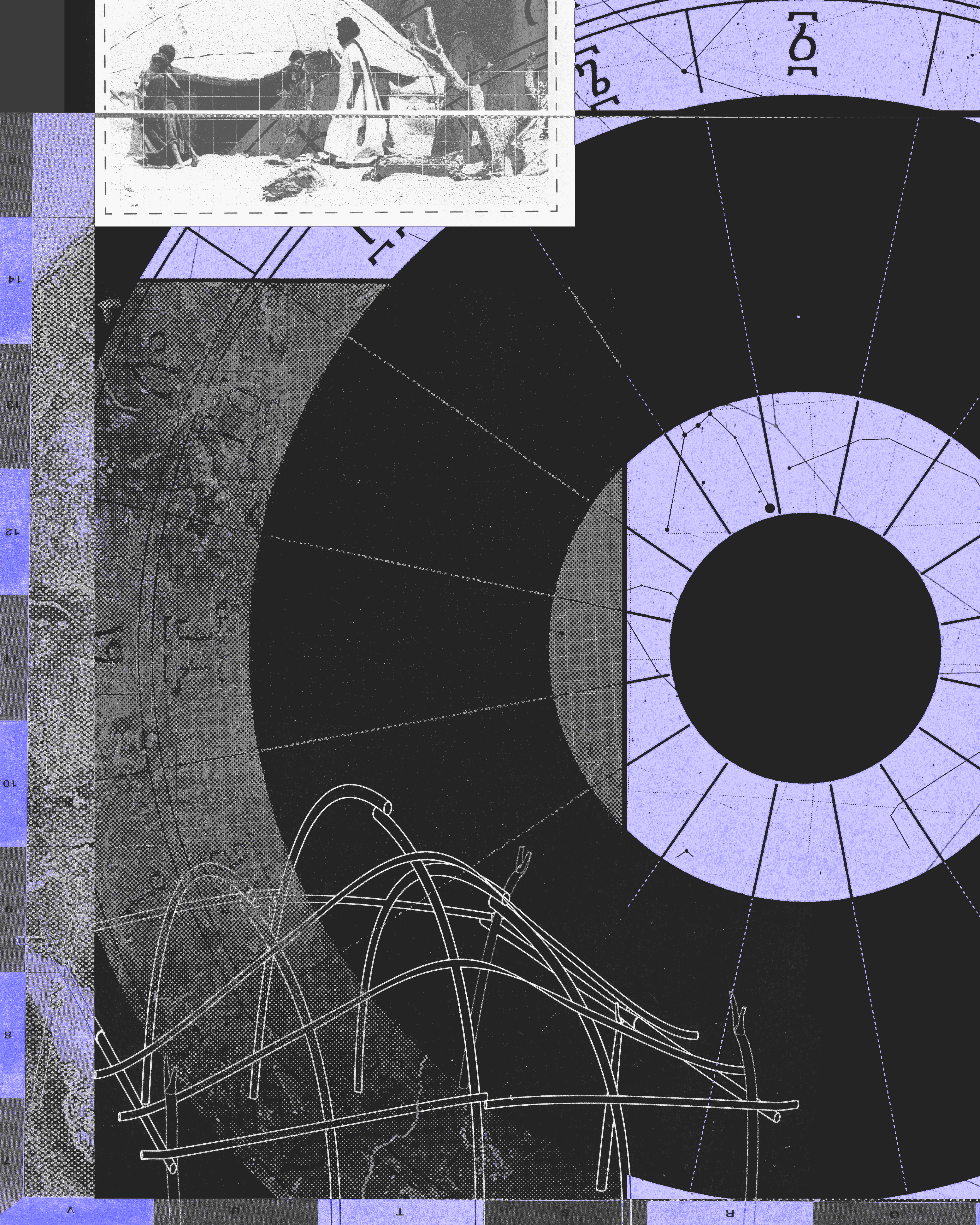
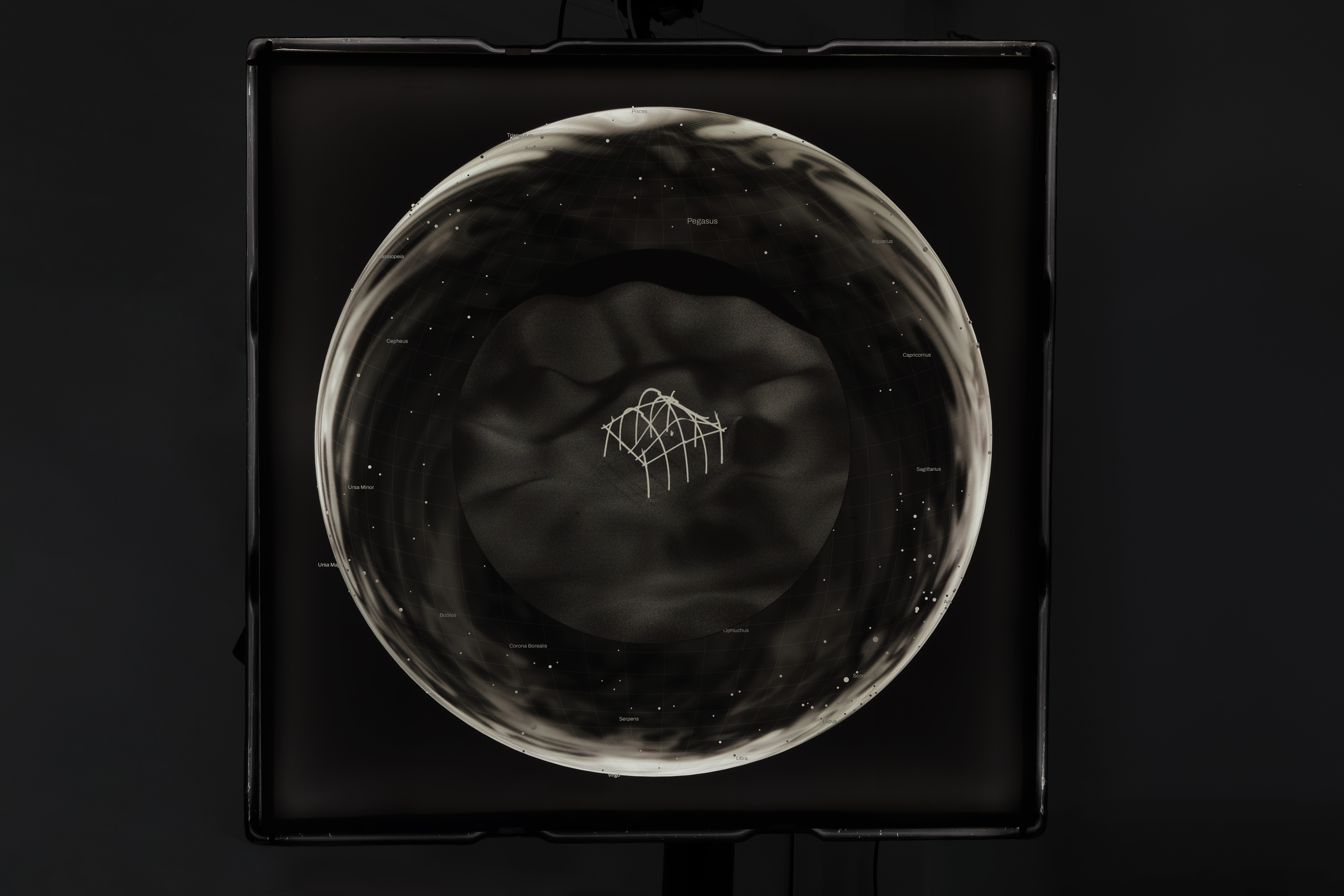
Campaign image for MIRIAM HILLAWI ABRAHAM: THE NIGHT THAT DREAMS — COSMOLOGIES OF SCALE, by Özgür Deniz Koldaş.
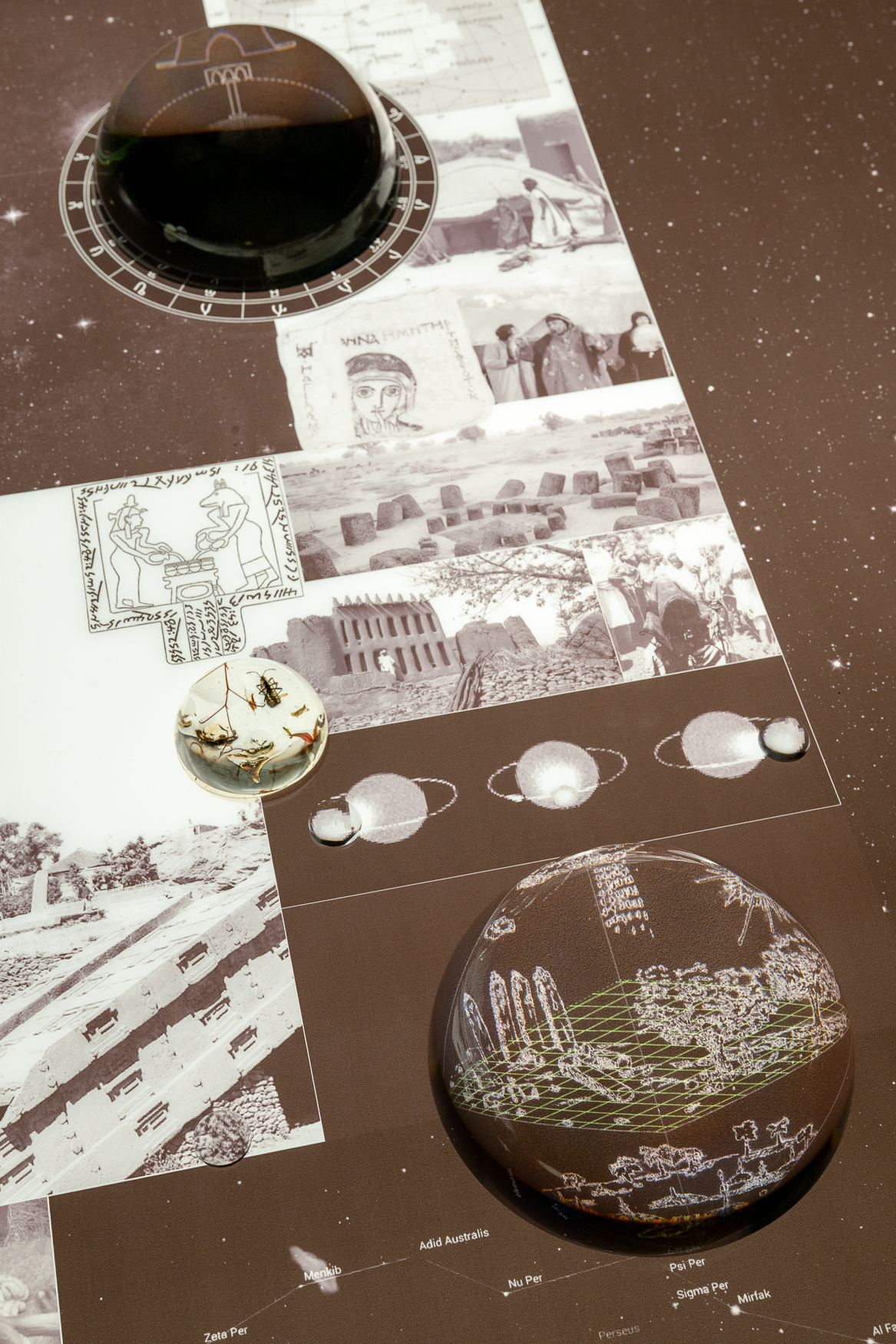
Abraham’s area of study is a vast stretch of continental land unfolding from the coasts of Mauritania and Senegal to countries bordering the Red Sea such as Sudan, Eritrea, Ethiopia, and Djibouti: the Sahel. This is an extremely diverse region in ecologies and climates shaped by centuries of transcontinental trade routes and nomadic societies, now vulnerable to encroaching desertification. The Sahel, just like the rest of the continent, is still scarred by the imposed colonial borders that fenced indigenous cosmologies within arbitrary lines drawn under extractivist and imperial logics. In her work, Abraham defies the static encasement of cultures within colonial borders and builds points of contact between them. The cosmologies of the Sereer, the Dogon, the Kel Ferwan (an Amazigh group), the Zār, and Abyssinia are the anchor points in the work. They are researched and interpreted by means of different cosmological objects of interpretation, navigation, and representation.
THE NIGHT THAT DREAMSis a scalar exhibition. By means of scaling, enlarging, distorting, overlaying, and obfuscating, the exhibition challenges dominant scientific ways of looking, understanding, and inhabiting the world, divulging ways of navigating it that are more affective, restorative, open-ended, sensorial, and participative. Scalarity is also a fundamental trait of the cosmologies that Abraham engages with. The Dogon, for instance, believe in a “dualised unity”, meaning that the largest existing entity in the universe is mirrored in the infinitesimally smallest living organism on earth. The latter, kize uzi, which is symbolised on earth by the seed of the species of grass called Digitaria Exilis (commonly known as Fonio in West Africa), turns into Aduno Talu, the “egg of the world” represented by the most massive star in the cosmos from which all living beings emerge.
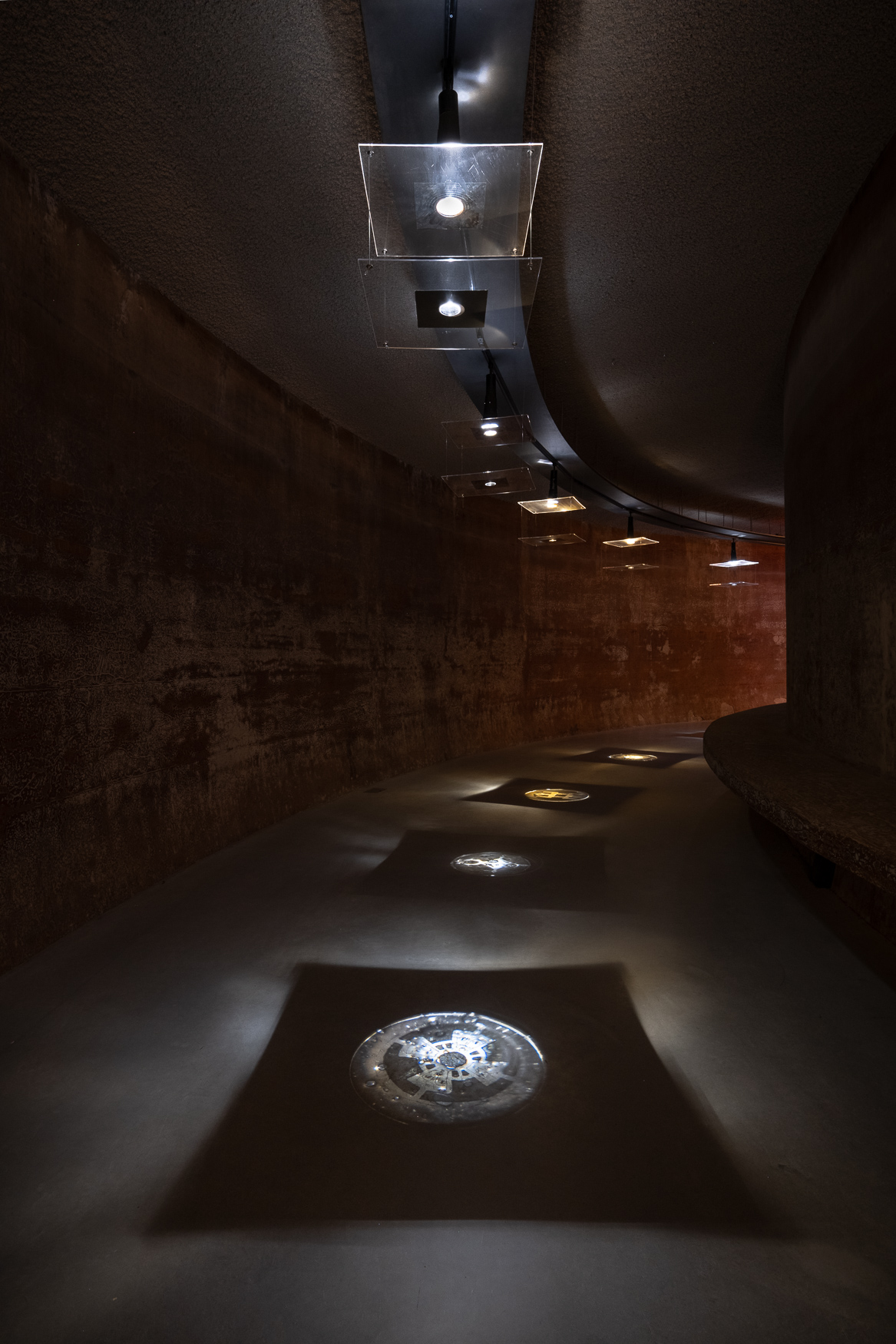
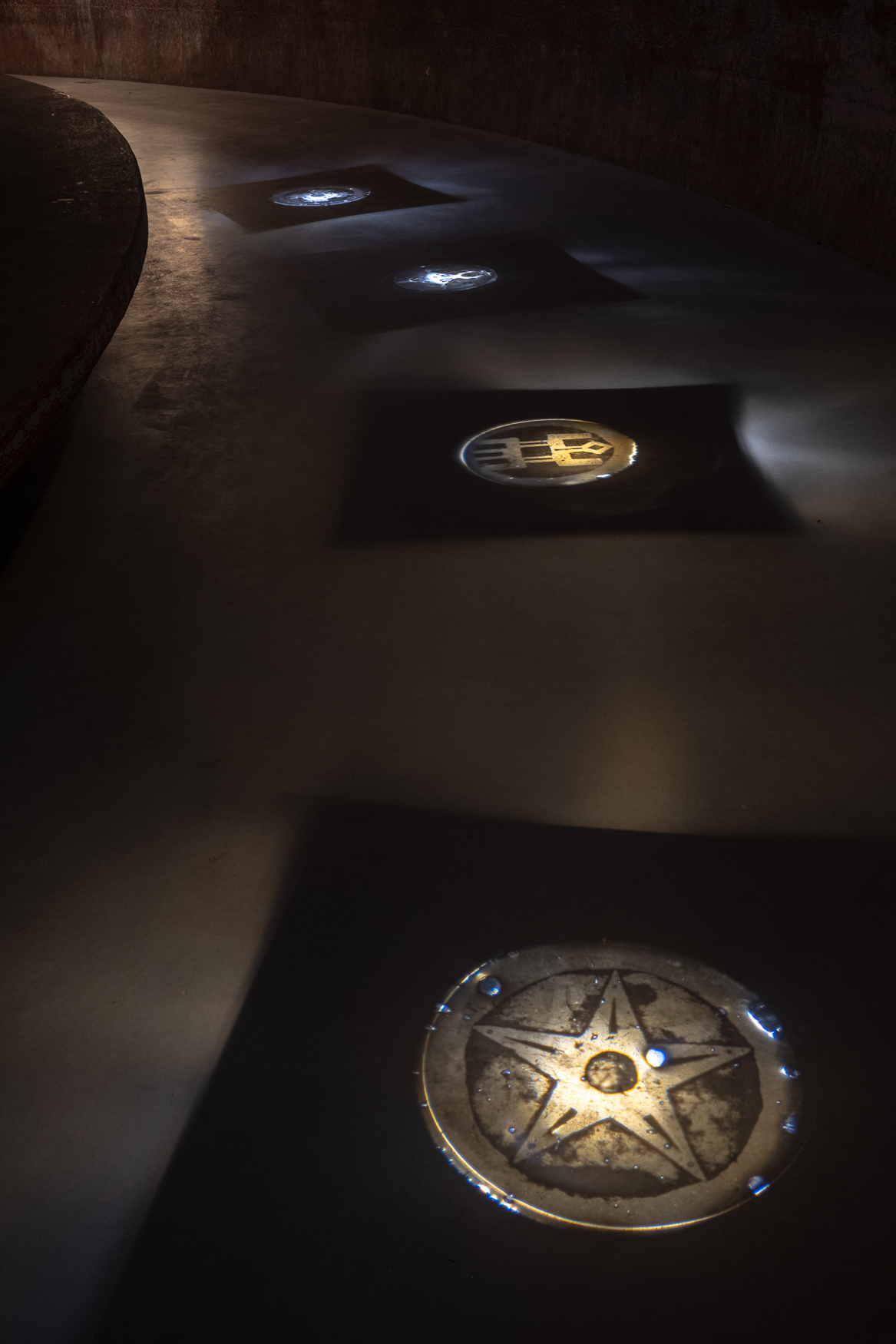
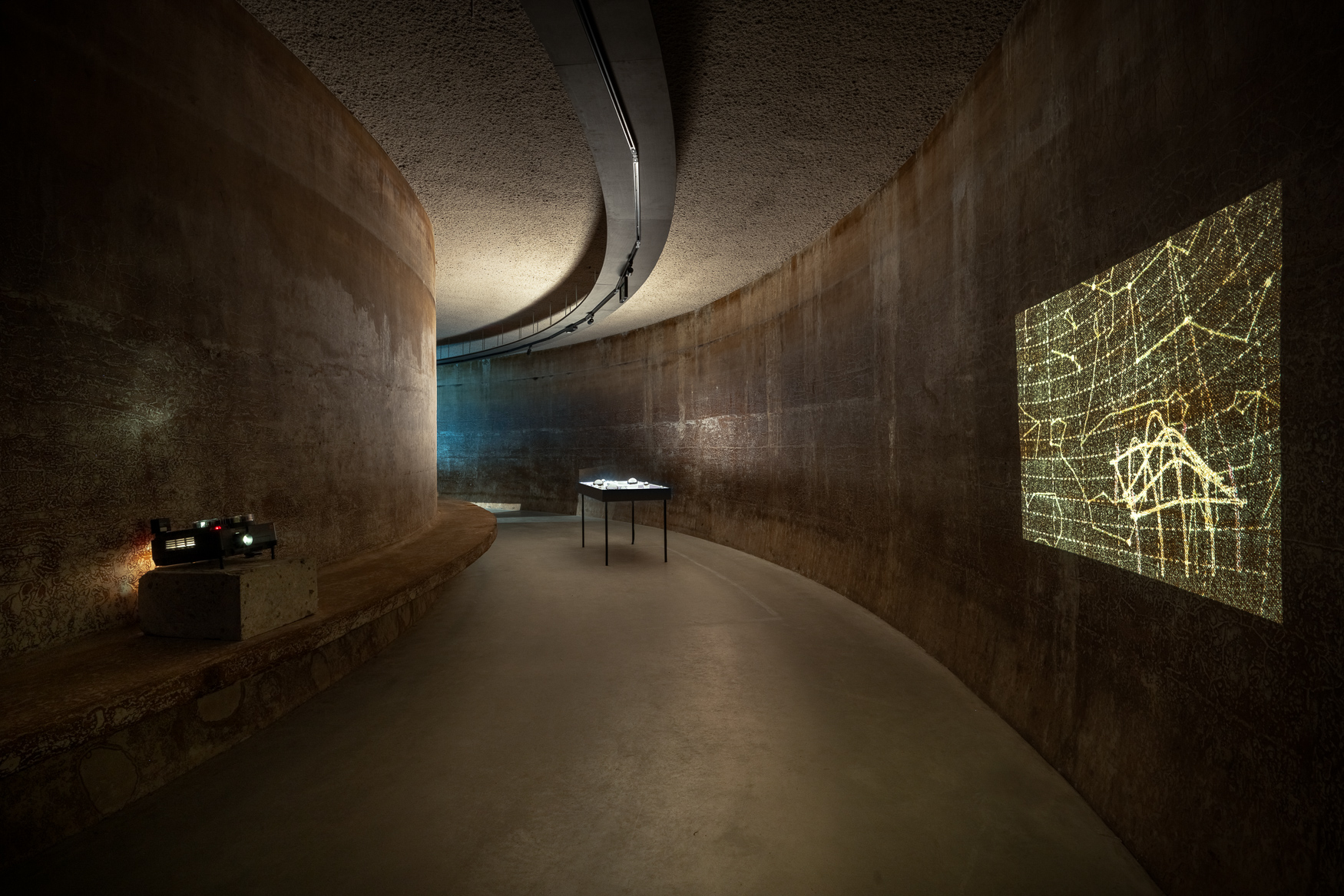
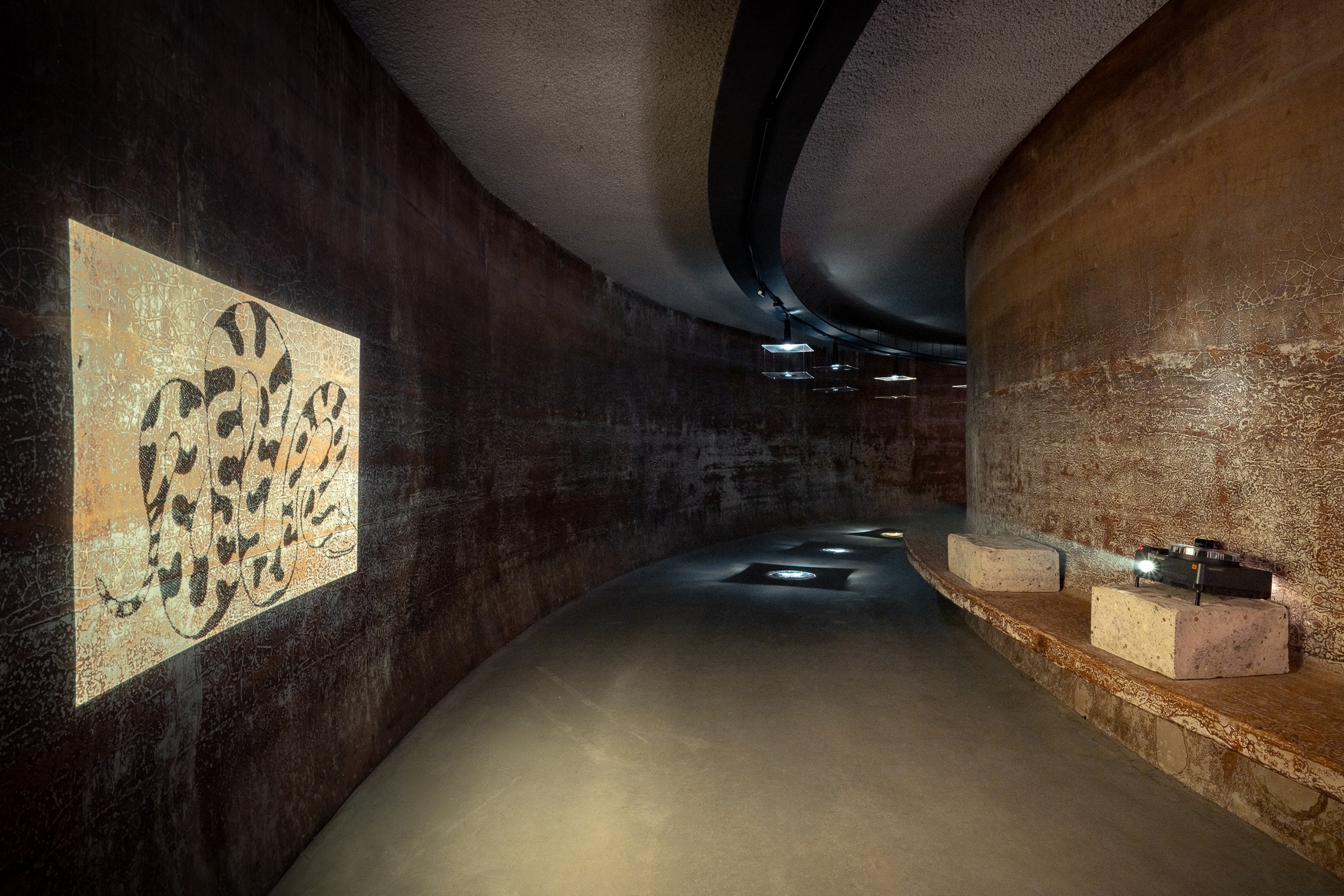
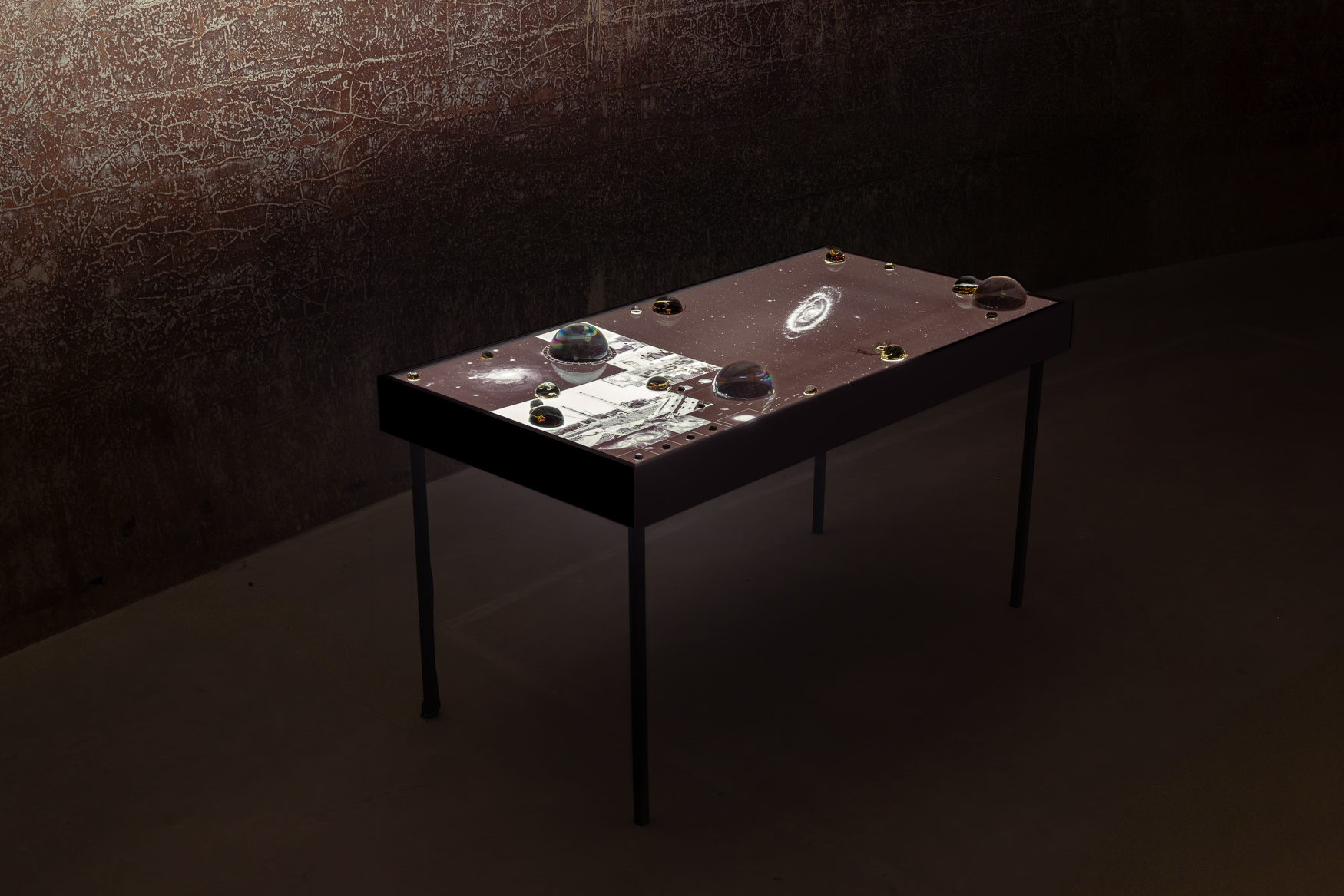
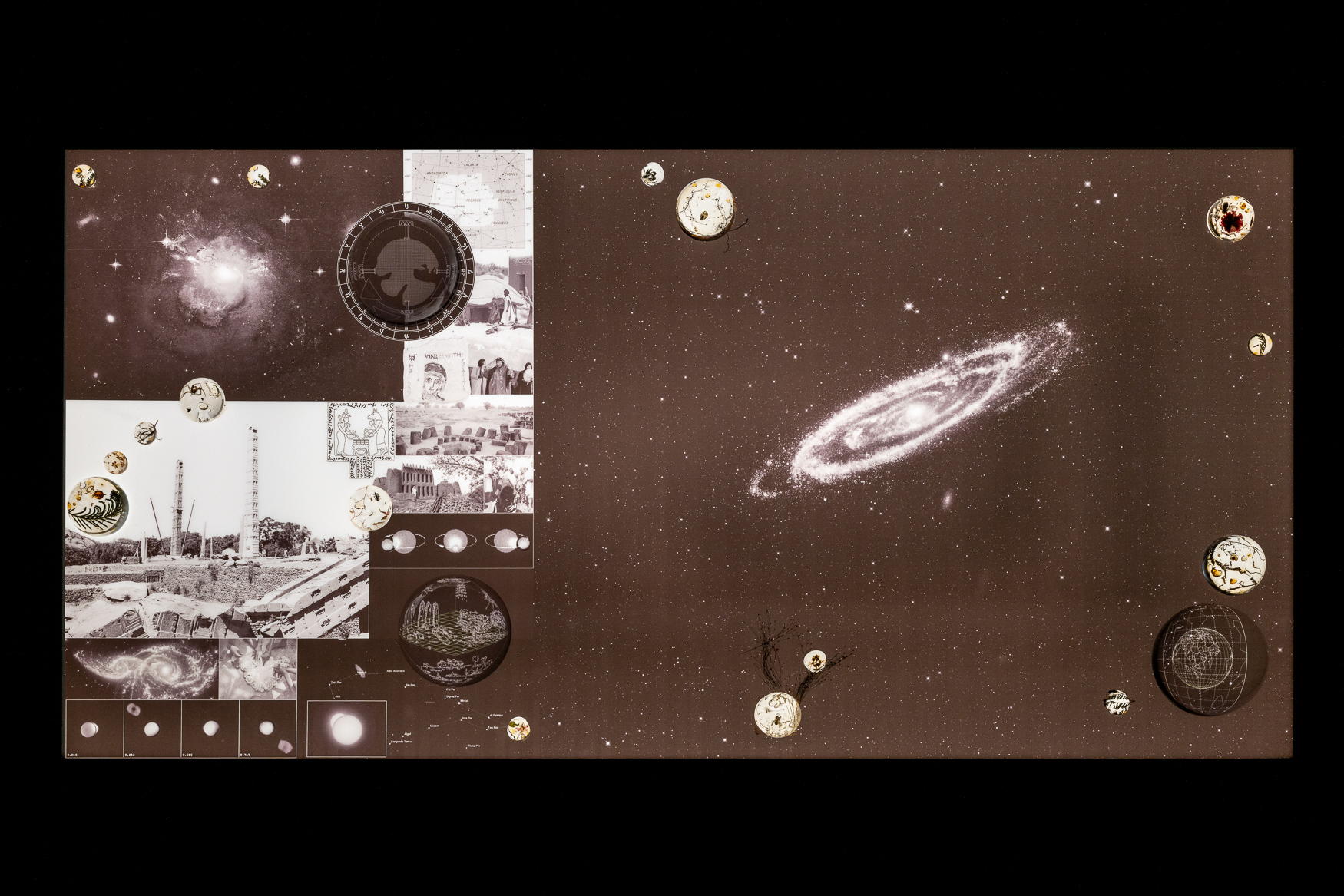
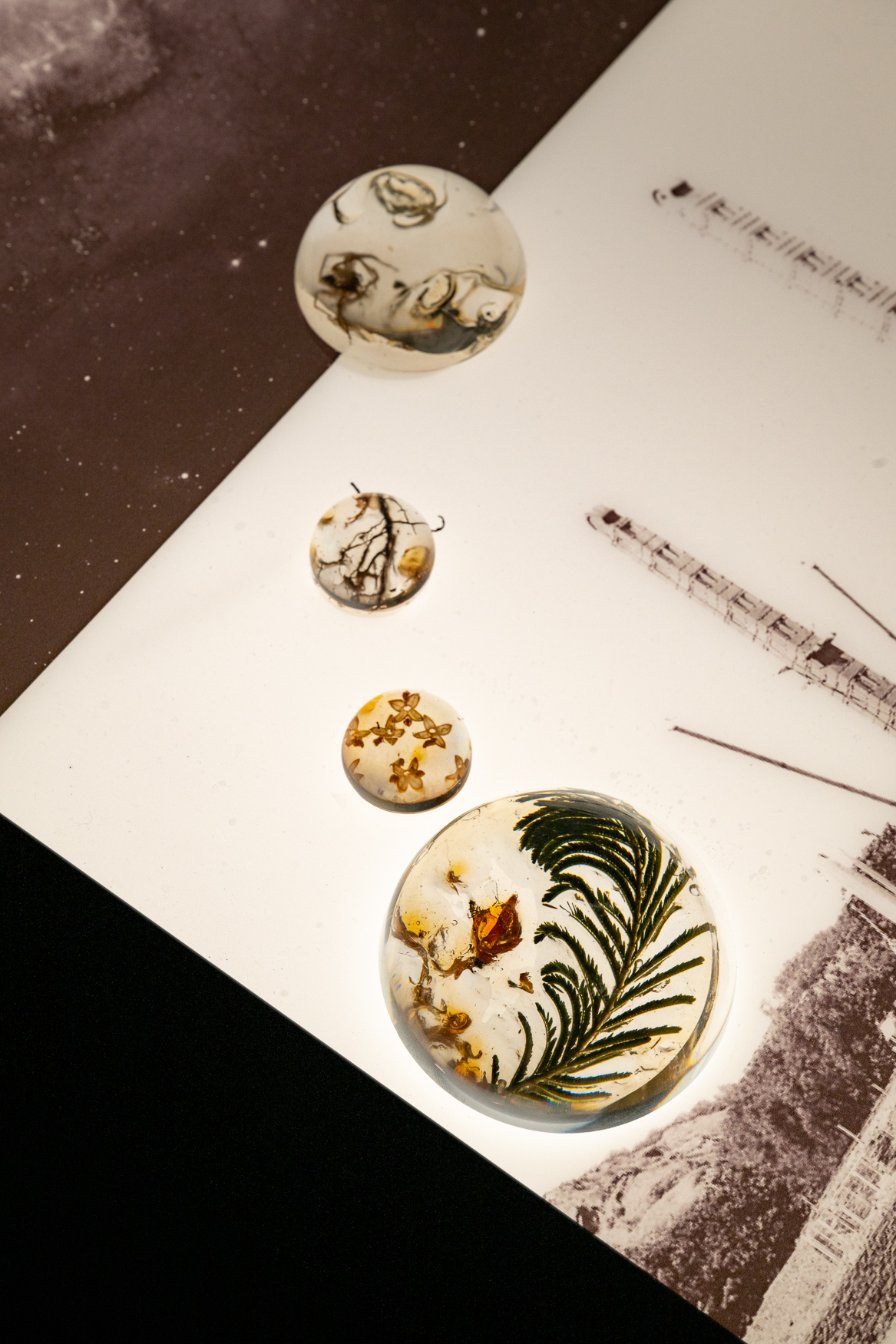
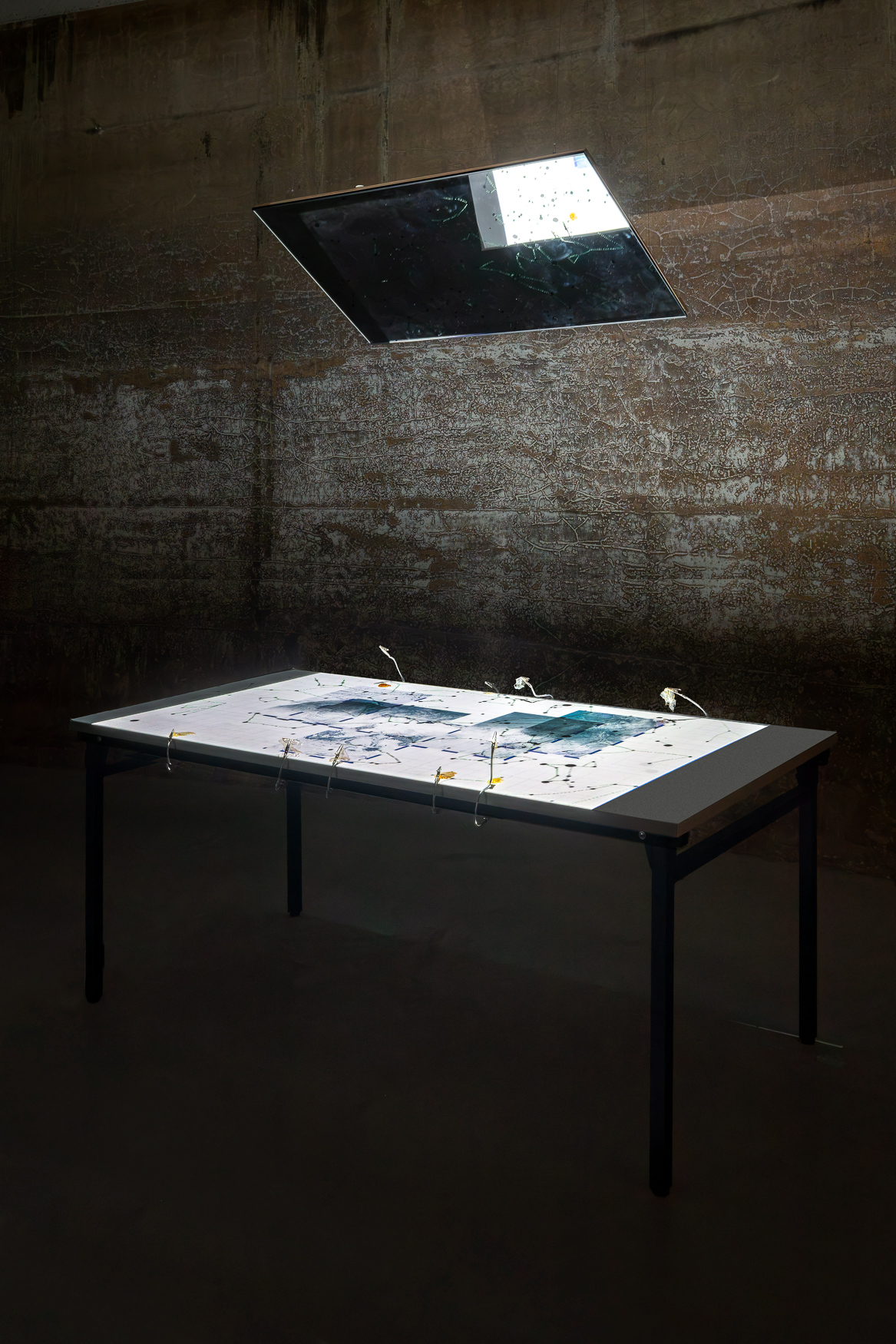
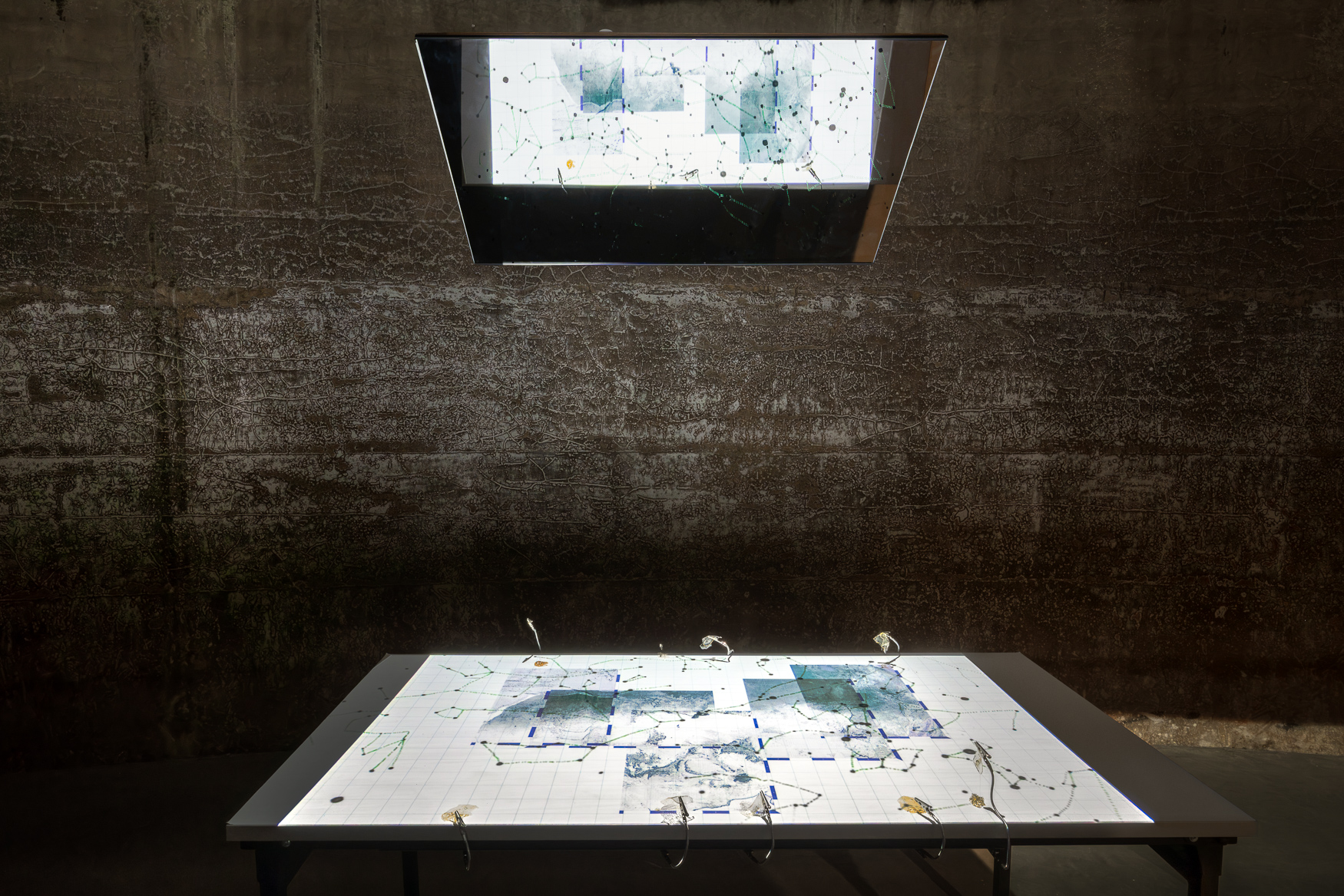
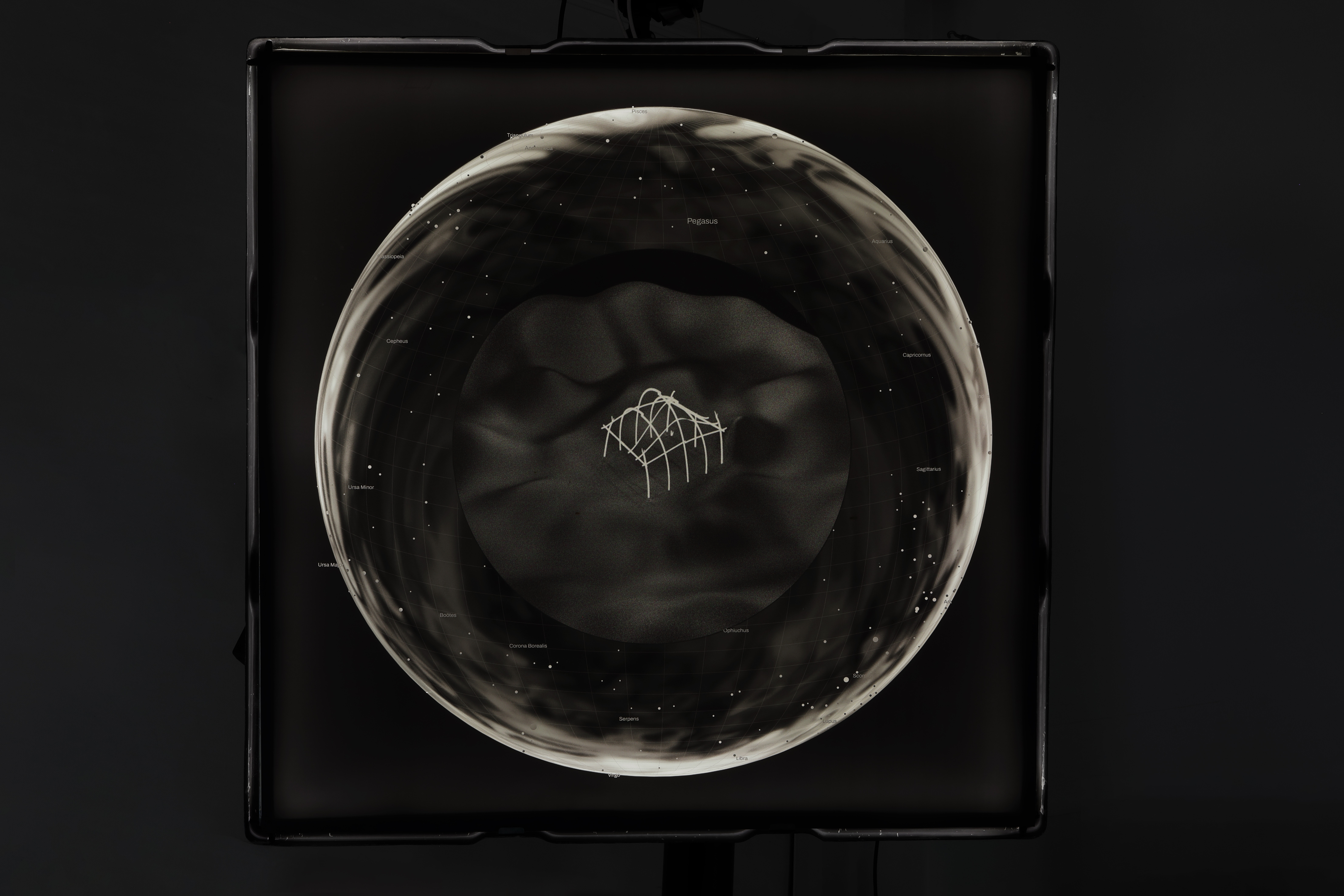
In this exhibition, an array of elements constitute an observatory for speculative cosmological inquiry. Lenses, projections, specimens, maps, cosmograms, and talismans are means to study African cosmologies following a methodology of interscalarity: the observation and analysis of phenomena across different scales of time and space simultaneously, rather than in isolation and decontextualised from one another. This manifests in the constant interplay of size, distortion, and layering that the works engage with. Interscalarity is a conscious choice to not only reveal the entanglement between Sahelian cosmologies but to also embrace and reveal the material and epistemological plurality of indigenous navigation in the African continent, which has been long buried beneath the imposed Cartesian Logics of western cartography and astronomy.
In Miriam Hillawi Abraham’s work, cosmology is understood as a multi-dimensional and scalable practice of situated technologies and embodied cartographies. Against a transcendental and universalist inquiry into the universe, she follows a genealogy of feminist objectivity, which in the words of Donna Haraway means that what is studied ought to be situated in its particular locality and respond to an embodied knowledge.
The starting point of her research was Ethiopia, her place of birth. From there, she moved West, tracing a journey from the Horn of Africa to the West African Sahel, unconsciously undoing the path of the “Mission Dakar—Djibouti”, a French ethnographic expedition carried out in the 1930s. This expedition’s anthropological findings are still an important source of knowledge on African cosmologies due to the restrictions of movement and access to African researchers to this day. In her research journey, African cosmovisions are pictured as both actor and agent, entangled by the nomadic transmission of knowledge and practices throughout history, continuously embodied in a specific place throughout time by its custodians. As Haraway would summarise it, “the only way to find a larger vision is to be somewhere in particular.”
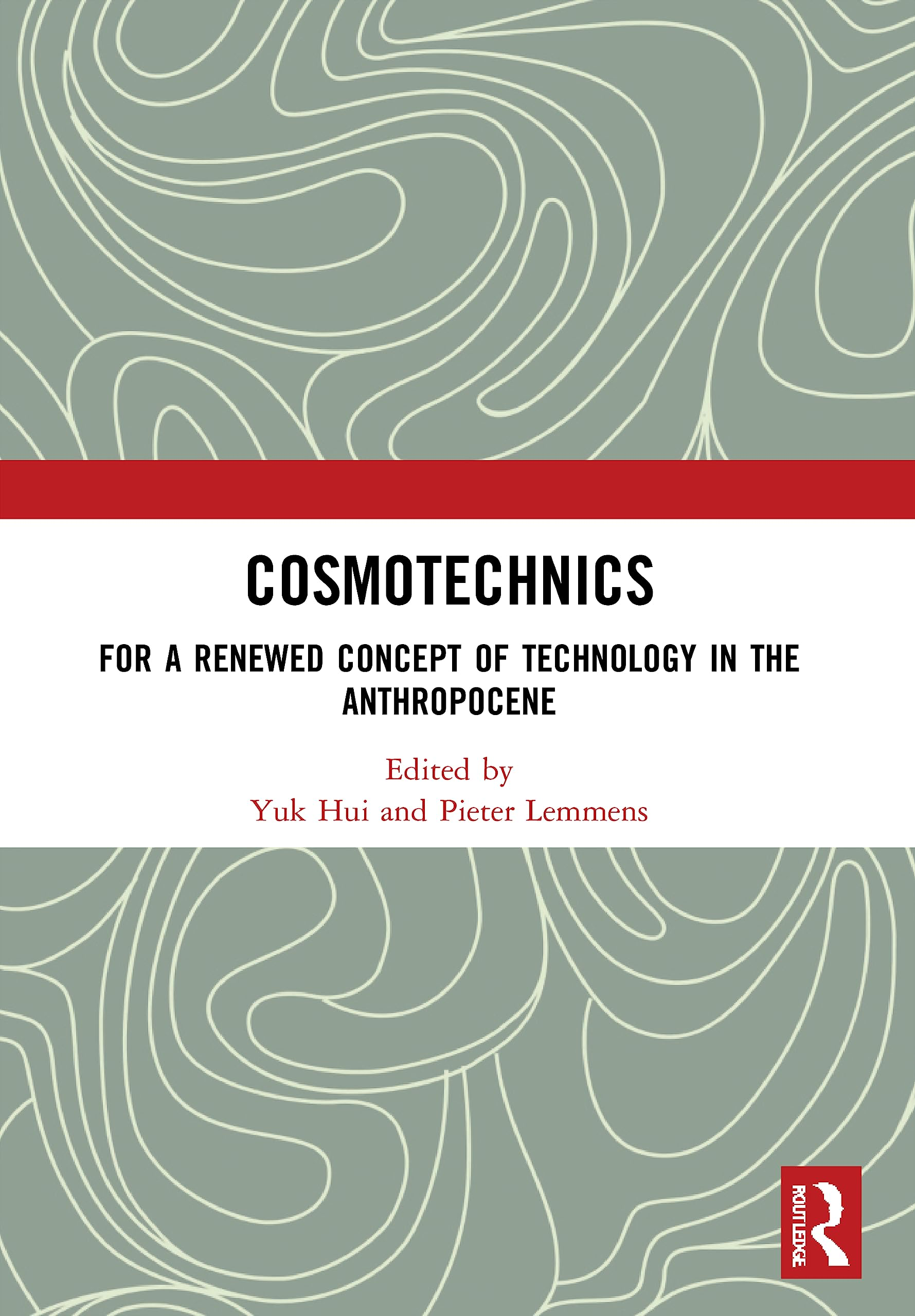
Across this exhibition, Sahelian cosmologies are presented as mediating devices between the terrestrial and the celestial as indicators of cosmotechnics, a term coined by philosopher Yuk Hui. Cosmotechnics defines the entanglement of cosmic and moral orders via the technologies that are developed in their accordance. Hui challenges the falsehood that technology is universal, neutral, or culturally uniform, and instead argues that every technological system is shaped by a specific cosmology and a corresponding moral or ethical framework.
This argument disputes the Western framework of technological modernisation and progress, and diversifies understanding and development of technologies within their physical and cosmological situatedness. Sahelian cosmologies and their technologies—maps, cosmograms, talismans, edifices, etc.—are proof of the multiple cosmotechnics found in Africa, and therefore, the many worldviews that coexist in dialogue and the capacity to reinterpret and reestablish them, which according to Abraham signals emancipatory futurism(s) situated in the African continent.
In THE NIGHT THAT DREAMS, Miriam Hilawi Abraham studies and directs our gaze to some of the cosmovisions and cosmotechnics from the Sahel to not only uphold them as ancestral heritage and technologies in themselves, but to also nurture an imagination of alternative planetary existences by highlighting the plurality of worldviews emanating from our shared skies.
Donna Haraway, ‘Situated Knowledges: The Science Question in Feminism and the Privilege of Partial Perspective’, Feminist Studies, Vol. 14, No. 3 (Autumn, 1988), pp. 575-599.
↩
Yuk Hui & Peter Lemmens (eds.),Cosmotechnics: For a Renewed Concept of Technology in the Anthropocene(Routledge, 2021).
↩
Curated by Sergi Pera Rusca.
The RADIUS 2026 year-programme YOU AND I ARE EARTH, of which this exhibition is a part, has been made possible with support from the Mondriaan Fund, the Municipality of Delft, BNG Cultuurfonds, and the Van der Mandele Stichting.
This exhibition is additionally supported by the Niemeijer Fonds. We thank them kindly for their support!
 The starting point of her research was Ethiopia, her place of birth. From there, she moved West, tracing a journey from the Horn of Africa to the West African Sahel, unconsciously undoing the path of the “Mission Dakar—Djibouti”, a French ethnographic expedition carried out in the 1930s. This expedition’s anthropological findings are still an important source of knowledge on African cosmologies due to the restrictions of movement and access to African researchers to this day. In her research journey, African cosmovisions are pictured as both actor and agent, entangled by the nomadic transmission of knowledge and practices throughout history, continuously embodied in a specific place throughout time by its custodians. As Haraway would summarise it, “the only way to find a larger vision is to be somewhere in particular.”
 This argument disputes the Western framework of technological modernisation and progress, and diversifies understanding and development of technologies within their physical and cosmological situatedness. Sahelian cosmologies and their technologies—maps, cosmograms, talismans, edifices, etc.—are proof of the multiple cosmotechnics found in Africa, and therefore, the many worldviews that coexist in dialogue and the capacity to reinterpret and reestablish them, which according to Abraham signals emancipatory futurism(s) situated in the African continent.